Showing posts with label Publishing Industry. Show all posts

Saturday, June 22, 2019

The definition of success

Novel Spaces is celebrating its 10th anniversary! We hope you've enjoyed the popular posts from our archives which we've shared with you over the past months. This one was first published on October 25, 2012. Enjoy! 


By Jewel Amethyst


While watching the local newscast, I heard a reporter introduce a prominent doctor as a successful surgeon, before proceeding to recite a long list of his achievements.  I turned to my husband and asked sarcastically, “So if another surgeon doesn’t accomplish all that he has, does that make him an unsuccessful surgeon?” 

My husband shrugged nonchalantly and responded, “I guess it depends on how you define success.”

I smiled.

When I first decided to publish my stories, my idea of success was getting a traditional publisher to publish my story.  At that time, I was not thinking about self-publishing and (now shamefacedly) like many authors a few years back, I didn’t think of self-publishing as being successful.  But now that I have gotten my work published, and spent three years without another in print, my idea of success has changed.

What makes a successful author?  Is a successful author a prolific author?  I can think of one Pulitzer Prize winning author who only published one book.  Harper Lee is by any measure a successful author.  Not only did she win the Pulitzer Prize in 1961, but her book, “To Kill a Mockingbird”, is considered an American classic and is assigned reading for English Literature in most middle and/or high school classes.  Yet Harper Lee is not prolific.

Is a successful author a rich author?  Well in that case the successful authors are few and far between.

Is a successful author on the NY Times bestseller list?  That is one measure of success.  But does that mean any author who is not on the NY Times bestseller list is unsuccessful?

Is a successful author published by a traditional big publishing house?  I’ve seen many successful authors who have self-published, even some producing bestsellers.  I’ve seen huge publishing houses publish books that tank.

What I’ve concluded is that what defines a successful author is dependent on the definition of success.  And that definition is not only subjective, but is also dynamic.  The definition of success as a writer is constantly changing for me.


Monday, April 22, 2019

The Second Time Around

Novel Spaces is in its 10th year! Over the coming months we'll be featuring some of the most popular posts from our archives. This one was first published June 5, 2018.


By Linda Thorne

Is writing that second book like the song says? “Lovelier the second time around. Just as wonderful with both feet on the ground.”

My answer is no, nope, nada. None of the above.

With the first book, I felt like Mad Max in Beyond Thunderdome, not knowing what obstacles I’d face until they were there, me fighting to mow them down and keep moving with one major goal, publication. I’d been so forewarned about rejections and criticisms that no matter how many hundreds of them I received, they only fueled me to keep churning toward my most important goal.

I’m no longer scything through underbrush seeking to become a published novelist. I’m already there with a publisher by my side. Yet, this second-time-around experience is more intimidating because others are counting on me to produce a book that is at least as good as my first and hopefully better. This scares me. Almost everyone I talk to about writing and books, asks me the same question: “When is your second book coming out?”

Time flies by and still no number two. This time I recognize when my writing is bad and this time it’s downright mortifying because I should be better just like everyone else seems to assume, presume, or expect. The second-time-around pressure is tremendous in a different way because there is something very tragic-sounding in the words, a one-book author.

I celebrated the first, but I will celebrate big-time when I have number two .

http://www.lindathorne.com

Saturday, December 22, 2018

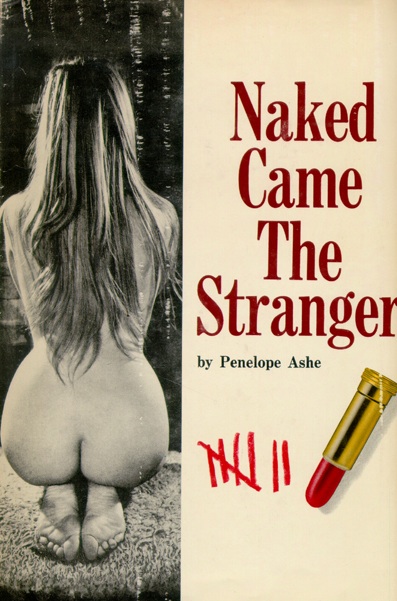
Naked Came the Stranger

Novel Spaces is in its 10th year! Over the coming months we'll be featuring some of the most popular posts from our archives. This one was first published December 18, 2011. 


By Kevin Killiany

At some point during discussions of the viability or validity of independent publishing someone critical of the concept is bound to opine that traditional publishing houses act as quality filters, ensuring that only books worth reading get published. Which will usually cause someone on the other side of the fence to bring up Nicole "Snookie" Polizzi's "A Shore Thing." Fact is, you don't have to cite extreme market miscalculations like that one. The old Barnes & Noble in Wilmington was a few blocks from UNCW and had a café friendly to writers and college students, complete with wooden tables for four and a long counter with stools across the front where I did much of my early writing. (The new, trendier B&N is nearer the beach and its café features little round tables fit for two coffee cups and a biscotti; no counter.) One of the pleasures of writing there was that at any time I felt overwhelmed or discouraged, I could stroll through the racks and find a dozen books worse than anything I'd written published by major houses.

However, as bad as some traditionally published books are, in every case they represent a storyteller's sincere effort to master the craft and an editor's belief in the quality of that effort. (Or, in Polizzi's case, the belief that a tell-all book disguised as a novel by a TV reality show personality would be of interest to someone, anyone.) You might take it as a given that no one ever set out to write a bad book. And you would be wrong.

Back in the late 1960s the bestseller lists in the USofA were dominated by works by writers like Harold Robbins, Jackie Collins, and Jacqueline Susann. Vapid novels about morally bankrupt people who would make the characters of Gossip Girl look like philosophical giants exploiting everyone around them, having sex at the drop of an innuendo, drinking and drugging to ridiculous degrees, and either coming to a bad end or finding eternal happiness as a result. This was the era of "Valley of the Dolls" and "Portnoy's Complaint." By the standards of today's more erotic romances, the sex was pretty tame, but it was shocking stuff forty-five years ago.

A newspaper columnist named Mike McGrady became so fed up with (or so alarmed by, depending on the source) the "sex sells" mentality he saw driving American culture that he decided to do something about it. He put together a team of twenty-four fellow journalists for the sole purpose of producing a horrifically bad novel with lots of sex and trying to sell it. The basic premise for "Naked Came the Stranger" was a husband and wife who are NYC celebrities with a morning radio talk show. The wife (Gilly) discovers her husband (Billy) has been cheating on her and decides to even the score by having sex with as many married men in their upscale Long Island community as possible. Her goal is to corrupt and seduce every archetype of civic and moral leadership she can find. Rules for writing were purple prose throughout (example: Gilly's breasts are "pendulums of passion swinging in the winds of lust") and two sex scenes in every chapter, with the sex act itself depicted mechanically but with awkward euphemisms for the clinical details. None of the writers knew anything about what the others wrote and McGrady required rewrites if he detected any literary merit whatsoever. Gilly's appearance and body type change with every chapter, though she is consistently beautiful. (There's a scene wherein the sight of her naked breasts causes a homosexual man to become heterosexual.)

In 1968 a relative of McGrady's posed as new author Penelope Ashe marketing "Naked Came the Stranger" as her first novel. The book sold to the first major house she
approached and was published in 1969, becoming an instant bestseller (the picture of the naked woman on the cover probably helped). Book reviewers in major markets, including Stern, Le Monde, and the New York Times, used phrases like "sizzling" and "thought-provoking" and compared the ersatz Penelope Ashe to John Updike and Philip Roth. She appeared on talk shows, was interviewed about sexual liberation in women's magazines, and advised aspiring writers to impale themselves on their typewriters. After a few months the authors appeared en mass on the David Frost Show, explaining their reasons for the hoax and expressing some embarrassment that their intended pillory of "sex sells" novels was now outselling its competition. The revelation of the hoax actually triggered a jump in sales fueled by widespread speculation the novel was in fact a roman-a-clef and that the adulterous men in the Long Island community were nationally known public figures.

Naked Came the Stranger is more fun to read about than it is to read. In fact, reading it is a chore. Not only are the mores of the period awkward by today's standards, the book itself is deliberately and methodically awful. Oh, there are moments. Like when Gilly asks a pornographer where he gets all his kinky ideas and he replies: "Like every other writer, I draw from the human condition." But on the whole, McGrady did a thorough job of eradicating anything of value from the manuscript.

Naked Came the Stranger was a bestseller not because of its excellence, but because people will read what they want to read despite what any arbiters of literary taste say or gatekeepers of excellence do. And "gatekeepers" includes the band of hoaxers who were sounding the alarm about the degeneration of American literature. The trend they were protesting matured, outgrew its "look what we can get away with" stage, and diversified into the spectrum of spicy, sensuous, and erotic romance novels that today makes up the lion's (lioness's?) share of the world fiction market. All of which says a lot about the role of traditional publishers, and the potential future of independents.

(More about Naked Came the Stranger in Museum of Hoaxes and Wikipedia)


Tuesday, June 5, 2018

The Second Time Around

by Linda Thorne

Is writing that second book like the song says? “Lovelier the second time around. Just as wonderful with both feet on the ground.”

My answer is no, nope, nada. None of the above.

With the first book, I felt like Mad Max in Beyond Thunderdome, not knowing what obstacles I’d face until they were there, me fighting to mow them down and keep moving with one major goal, publication. I’d been so forewarned about rejections and criticisms that no matter how many hundreds of them I received, they only fueled me to keep churning toward my most important goal.

I’m no longer scything through underbrush seeking to become a published novelist. I’m already there with a publisher by my side. Yet, this second-time-around experience is more intimidating because others are counting on me to produce a book that is at least as good as my first and hopefully better. This scares me. Almost everyone I talk to about writing and books, asks me the same question: “When is your second book coming out?”

Time flies by and still no number two. This time I recognize when my writing is bad and this time it’s downright mortifying because I should be better just like everyone else seems to assume, presume, or expect. The second-time-around pressure is tremendous in a different way because there is something very tragic-sounding in the words, a one-book author.

I celebrated the first, but I will celebrate big-time when I have number two .

http://www.lindathorne.com

Friday, March 2, 2018

Traditional Publishing: School of Hard Knocks?


Author Stephanie Bond, who has sold 2 million books and one of whose titles has been adapted for a Hallmark movie, credits her success as an indie author to the hard knocks education she got in traditional publishing. As I read her interview on Indie Reader I found myself nodding at the parallels with my own publishing experience.

While I haven't sold 2 million books, I too started out in traditional publishing (Dorchester Publishing, Montlake Romance) and I can verify the prevalence of those hard knocks. Here are a few, from my experience alone:

1. Publisher goes out of business, chaotically, over a period of years. Your titles with them, including option books (and scheduled-to-be released books, as some of my co-authors learned) are tied up, sometimes for years. My indie venture never goes out of business unless I want it to, my books are never tied up, and they never go out of print.

2. Bond, in the interview mentioned, also stated that "digital publishing in general is simply a better fit for my hybrid books that are part mystery, part relationship; traditional publishers never knew how to categorize my books or where they should be shelved in brick and mortar stores." When my option book finally emerged from the ashes of Dorchester, I had this same problem with my own part romance, part mystery, noir-ish title. The agent said she loved the story but couldn't settle on a genre, so she decided not to send it out to publishers. That book became my first indie title.

3. Authors generally have zero control of their intellectual properties once they sign that traditional publishing contract: not over covers, editing, pricing, release schedule, making changes, and myriad other things. As an indie I can alter anything at will, and the changes go live in hours or a day at most.

4. I was told to stick to one genre and build up a readership there before branching into side alleys. But I don't write that way: I write what I'm moved to write when I'm moved. I've written romance, historical, literary, memoir, and am currently dabbling in mystery. I write and publish short stories and novellas, standalone and in series, as well as novels. I'm all over the map. Indie publishing allows me to write and publish the way I want to rather than some way that's prescribed for me. I don't wear prescriptions well.

5. Making money through trad pubbing is extremely difficult once that advance has been paid. I made more money through my indie books last year than in all the years since I was first pubbed in 2008 -- all of them combined.

6. If you happen to earn out your advance and royalties start trickling in, you have to wait 6 months or longer to see that money, depending on your publisher's payment schedule. If you're agented, like I am for the traditionally published book, you have to wait longer yet for those pennies -- minus the agent's commission -- with all sorts of attendant issues that I won't get into. I get paid in 2 months for my indie titles. 2 months. With one aggregator that I use to get my books on Barnes & Noble, Apple, Kobo etc., those royalties are in my bank account two days after the payment goes through. If I opt to use a service like Payoneer, the payment goes into my account immediately. IMHO, that's hard to beat.

The traditional publishing experience isn't all negative. Amazon's Montlake Romance acquired my first title, Cafe au Lait, in 2013, 5 years after its first publication, propelling it to the UK Kindle Top 100 list several times during dedicated promotions over subsequent years and generating significant royalties (finally). I doubt I could have done that on my own; an indie author simply does not have the promotional clout of Amazon's mega-machine. Conversely, indie publishing is not a walk in the park: it is a hell of a lot of work, and if often takes time for returns to start coming in: it was three years before I began to see regular royalties, and another year before I saw significant royalties. 

I don't regret my hard knocks in the school of traditional publishing: they smashed my rose-colored perspective on publishing forever, and equipped me with something that money can't buy: invaluable experience. To the hybrid authors out there: How would you compare your traditional vs. your indie publishing experience? I'm aware that everyone's mileage differs.

Liane Spicer

Tuesday, February 6, 2018

Are You Ever Too Old to Spin a Good Yarn?


by Linda Thorne

I wrote this post a couple of years ago and a fellow author published it on her blog, but somehow posted a picture of someone else holding a dog I'd never seen. I was looking for ideas for my Novel Spaces' February post and decided to resurrect this one using a picture of me this time.

The other woman looked younger than me and her dog was truly cute, but I thought I'd post my real two pooches here (taken January 2018). 


Here's the post with a minimal amount of updated information on older authors I personally know:

If you’ve chosen a life of writing fiction late in life, just go with it. Ignore the naysayers. This post is as much of a reminder to me as to anyone else in the same or similar boat.

It is a fact that unless you die young you will continue to age - a no-brainer. Another fact is that almost universally we do not know exactly when we will go to that great library in the sky. For those of us getting up in years there are the dreaded actuarial charts telling us the clock is ticking. Tick tock, tick tock. But, is time really running out?

I know, I know. You’ve probably heard comments like: Publishers consider “older” as a negative, fans prefer younger writers, and attractive sells better than the unattractive toll that age takes on our appearance. In response to this, I say:

I don’t know if publishers have concerns about taking on older authors. In my experience of starting out and mucking around in the writing world, I haven’t heard or seen a thing to make me think they care about much more than taking on work they can sell.

Fans seem to be there for older writers too. Google the statistics.

And does anyone care about that picture of a wrinkled old man or woman on the back cover of a book? I don’t think so unless it’s the author in the picture wishing he or she could look younger.

So, having said this, let’s take a look at reality:

George Elliot’s first book was published when she was 52 years old and Raymond Chandler’s Big Sleep when he was 51. Well, they beat me by a few years, but there’s more:

Laura Ingalls Wilder, famed for her series of the Little House on the Prairie may’ve started writing in her forties, but she didn’t become successful until her mid 60s.

Anna Sewell first published Black Beauty, at the age of 57.

Charles Bukowski started writing at age 50 and published Post Office when he was 51.

Bram Stoker wrote Dracula when he was 50.

Harriet Doerr did not begin writing until she was in her 60s and was not published until she was 74.

Let’s not forget P.D. James. She may’ve started earlier than some of us (late 30s I think), but she continued to publish into her 90s, still showing up at literary festivals and other events. Her many books are world famous. But the oldest of this group I’ve found so far is Millard Kaufman who published his first book when he was 90 years old.

I met Marilyn Meredith at the San Joaquin Valley Sisters in Crime group when I lived in that area from 2002 to 2007. I’ve heard her speak about her writing on numerous occasions and she often tells the audience about being first published when she was a grandmother in her early fifties. Currently Marilyn is in her eighties and can claim to fame having published forty some books. I’m starting to lose count.

When I moved to Nashville and joined the Middle Tennessee Sisters in Crime organization, our group’s president, Chester Campbell, was in his 80s and had published some novels. He didn’t begin writing fiction until after he retired in 1989. He did not publish his first book until 2002 at the age of 77. When I first wrote this post, Chester had eleven books out and was turning 91. I understand he has more books out now and is pushing 93.

So does age really matter if you want to take on a writing career? All I can say is why should it if it’s what you want to do. Don’t sweat the real or perceived obstacles. Or those hideous insurance industry actuarial charts. If we ignore them, maybe they will go away and we won’t.

Okay, now let’s see, what was Dorian Gray’s secret potion?


Thursday, February 1, 2018

Guest author Kathleen Kaska: A Study in Physics: Riding the Publishing Roller Coaster

Kathleen Kaska
Kathleen Kaska is a writer of fiction, nonfiction, travel articles and stage plays. Among her works are the award-winning Sydney Lockhart mystery series set in the 1950s, and Murder at the Arlington which won the 2008 Salvo Press Manuscript Contest. Kaska has also published three mystery-trivia books: The Agatha Christie Triviography and Quiz Book, The Alfred Hitchcock Triviography and Quiz Book, and The Sherlock Holmes Triviography and Quiz Book. Find her on Twitter and Facebook.


I’ve often been asked what it’s like being a published author. My answer has always been the same: it’s like hitching a ride on a roller coaster. You win a writing contest, which lands you a book contract. Your spirits soar. Another manuscript is rejected for the umpteenth time. You feel like tossing your laptop in the nearby stock tank. A reader tells you that your book was so entertaining and funny he bought several copies to give friends. You do a happy dance. Then some person, identified only by their initials, reviews your book on Amazon, gives it an average rating of three stars, and calls your writing “insipid.” You look up insipid to make sure it means what you think it means. It does.

You wonder if it’s all worth it. Then you awaken in the middle of the night with an ingenious idea for a story, and you’re glad you didn’t drown your laptop. Or you’re in your favorite coffee shop and can’t help eavesdropping on a shocking conversation. By the end of the day you’re using it in a murder plot for a new story.

Forget the downside of being a published author; it’s the writing that really matters. And in time you’ll realize that riding the roller coaster is part of the process.

By the way, the physics involved in moving a roller coaster cart up and down the track is quite simple: it’s the momentum gained by the force of gravity on the downhill slopes that gives the cart the energy to shoot up the next hill. That’s why the steepest hills are always at the beginning of the ride. Without the downhill slopes, going uphill would be impossible.

If you view writer’s block, rejections, less-than-favorable reviews, and all the other unpleasant surprises that come your way as opportunities that propel you forward, those plummeting descents won’t feel so frightening.


This post is an excerpt from my latest book, Do You Have a Catharsis Handy? Five-Minute Writing Tips, a collection of my blog posts written for and published by Cave Art Press.

I’m giving away three copies of Do You Have a Catharsis Handy? To be eligible, leave a comment. It’s always a delight to hear from readers.


Tuesday, January 30, 2018

Guest Author Nerissa Golden: Beta Testers My New Must Have

I am that woman who will inbox my blogger and author friends and tell them I found an error. It isn’t to be picky but because errors distract and make it more difficult for readers to connect with your work. First impressions still count and too many errors frustrate me, and I may or may not finish the book. As many authors today self-publish and print on-demand, it is much easier to fix errors on the fly. It is even easier if you’re a blogger or your book is digital as changes can be made almost instantly.
So, I was most disturbed to find not one, not two, but more errors that I dare to confess in my first novel Love’s Sweet Joyalmost one year after it was released. Had it been edited? Yes, and I was happy with the story and the finished product. My readers clearly were too as they raved about the book, but no one said, “I found an error”, except one friend. Thanks to my sister who clearly is as anal as I am about writing, (chalk that up to having a mother who was a primary school teacher) I was able to fix a few wrongs. She did not hesitate to mark up pages of her ebook to show me the error of my ways. I was disappointed that I had to make numerous corrections and yet very relieved that I could improve on the final product.
Finally, someone was telling me the truth and not merely saying “it was great.” It took her two days to read the book due to other commitments. Back in the day (before children) a novel or two or three was nothing to read in a day. She helped me make my book truly great and hopefully now error-free. My sister also validated my work and my efforts to honor some elements of our childhood in the places and foods I wove into the story. She remarked that it was a beautiful way to honor my parents.
Beta readers are now going to be a part of my editing process going forward. These readers don’t need to be my friend or a relative but they must be willing to give me honest feedback on the storyline and also help catch those errors that an author totally misses after the tenth time of seeing reading their manuscript.
I enjoy reading and I always spot the errors in books and I would hate for people to find an endless supply of errors in mine. Do you use beta readers? What is the process you use to make sure your books are reader ready?

Nerissa Golden is the editor of Montserrat’s top digital travel and information platform Discover Montserrat.
The former journalist and international speaker is the author of seven books. In 2017, she released the first two novels in the Return to Love series of romantic fiction, set in her picturesque homeland. Follow her on nerissagolden.com or @trulynerissa on Twitter.


Saturday, December 2, 2017

2017 - My Publishing Year in Review


It's still a shock to me, but 2017 has been my best publishing year to date. No, I'm not making the big bucks, but I'm making enough to make writing and publishing worth the countless hours of time and effort I've put in since 1997 when I completed the first draft of my first novel.

That first novel did not see the light until 2008; that was no fault of the book but of the author who shelved it for years before dusting it off in 2005, revising, acquiring agent representation in 2006 and a publisher in 2007. Returns on that book, on which I made a paltry 4% of retail per my contract, were minimal.

In 2013 or thereabouts I decided to go rogue and started publishing novels, novellas and shorts, in several genres and using different pen names, on the KDP indie platform. Sales were slow and inconsistent, and as the years passed I became more and more disillusioned with Amazon's policies. At the end of 2015 I took all my titles out of Amazon's Select program and went wide in January 2016, selling on B&N, iBooks, Kobo, Smashwords, Google Play and others.

Going wide was the BEST decision I ever made. From the very first month, January 2016, my royalties began to climb and by March I began receiving cheques like clockwork. It was just coffee money, but it was the first time I was getting paid every single month for my writing. One year later, in January 2017, two of my titles suddenly took off on iBooks and my monthly royalties increased by roughly 1000%. Those monthly payments cover a few of my bills, including groceries. I am still in shock.

I'm an optimist, disgustingly so according to one of my friends, and as 2018 draws near I have solid grounds for that cheerful outlook. I'm hoping to increase my royalties by putting more titles in the stores--or, at the very least, maintain my current momentum. Publishing is a very unpredictable business, but barring major debacles, 2018 is beckoning with a smile.

What has publishing been like for you in 2017?


Monday, November 6, 2017

Getting Your Book(s) into Barnes and Noble's Brick and Mortar Stores


by Linda Thorne
 

Getting my book into a brick and mortar Barnes and Noble store has been a real challenge. Anyone who has a B&N Nook and wants to order it as a download can go to B&N online. Anyone who wants to buy the trade back version can also purchase it at B&N online and have it mailed. The problem is the market for books online (and a great many other things) is dominated by Amazon.

But book buyers still flock to Barnes and Noble's brick and mortar stores nationwide. In-store buying is where readers can peruse the bookshelves the old fashion way: hold a book in their hands and flip through the pages, read the back cover and run their fingers down the book spine.

When Just Another Termination was first released, libraries and bookstores were my challenge. I made it into Parnassus Books in Nashville - a big one locally. I've had my book in the Southern Bound Book Shop located where my book is set in Biloxi and Ocean Springs, MS since February of 2016. I have a supply at the Words of Wisdom (WOW) bookstore in the Hermitage suburb of Nashville. The manager at the Barnes and Noble bookstore in Gulfport, Mississippi a while back agreed to stock my book one at a time. When the single book sold, her plan was to replace it with another and continue one by one, but when she tried ordering the first copy, she ran into a problem. First, it was not considered returnable and also my publisher was not on a recognized list for B&N warehouses. I worked with my publisher to get the needed changes made and submitted to Barnes and Noble's small press department. Rejection. I worked at it a second time this past August and lo and behold, I received an acceptance letter just last week. My book will be stocked in certain B&N stores of their choice. I don't know where these stores are, but I've made it to their warehouse and into some of their bookstores. A big step for me. Now, when I approach a Barnes and Noble store about carrying my book, I should have better luck. Here's the links to all the bookstores I mentioned here:

Parnassus Books - Nashville, TN: http://www.parnassusbooks.net/
Southern Bound Books - Mississippi Gulf Coast: http://southernboundblog.net/index.html
Words of Wisdom (WOW) - Hermitage, TN: https://wowbookstore.com/
Barnes and Noble - Gulfport, MS: https://stores.barnesandnoble.com/store/2961

Below is a picture of me and other authors at a Meet and Greet the Authors event at the Cool Springs (suburb of Nashville) Barnes and Noble store over a year ago. I participated in the event and sold some copies of my book through B&N, but still could not get the store to stock any because of those same roadblocks I ran into in trying to get into the Gulfport, Mississippi B&N.


I am hoping the recent Barnes and Noble acceptance letter will open many doors for me. I was ecstatic to receive the letter of acceptance last week after a two-year effort to do so.  


Thursday, November 2, 2017

Writing in Multiple Genres


I began my publishing career with a contemporary romance novel. This choice of genre was quite deliberate: it had nothing to do with the huge market for these books, and everything to do with the launch of Kensington's Arabesque imprint in the 1990s. Kensington was the first major publishing house to feature a line devoted to love stories about people of color, the absence of which had often been lamented by my friends and colleagues.

My publishing contract at the time included an option for a second romance novel, so I wrote one. It got caught in the meltdown of the publishing house, and I eventually recovered the rights and published it myself. Since then I have gone on to publish in several genres, using different names to keep things nice and orderly. I use my given name for literary work, and different pen names for historical fiction and interracial romance. I have a mystery series in the oven and I plan to use a variation of the Liane Spicer brand for those.

It can get a trifle confusing at times, I admit. In addition, I have a science fiction novella that I'm considering turning into a series, a completed memoir, and two works of nonfiction. Which names should I use for these? Should I come up with a new one for the SF series to eliminate the risk of confusing (and losing) my readers in a particular genre?

The bestselling author Judy Blume uses just one name for her juvenile, YA and decidedly adult titles. Others such as JK Rowling and Sue Grafton use different names for different genres.

My question is: How do you handle the multi-genre issue? Do you stick to one genre? And if you write in multiple genres, how do you handle the name challenge?

Sunday, August 6, 2017

Verified Book Purchase - Amazon


by Linda Thorne

Has anyone else noticed on Amazon that reader reviews only show if the book was purchased from Amazon? Once upon a time they all showed. There's a way to see them, but will the average online shopper even bother? They may, but only if they can figure it out.

Assuming the shopper is aware he is not seeing all the reviews, how does he find them? The offer to see all is hidden behind links that say "verified purchase reviews" above and below the list of reviews (even though some are not verified purchase reviews). Click on customer reviews and those for Amazon purchased books will appear under a big, bold heading that says: Top Customer Reviews. An obscure little link above that heading will say, "See all verified purchase reviews," which you're already looking at. If you click on this top link, you'll be offered an opportunity to see all the reviews. At the bottom there's another tiny link that says, "See all verified purchases (newest first)." If you click there, you'll see other filters, but none offering all reviews. You'll have to click on a second "verified purchase" filter to get an offer for both verified purchase (a 3rd time) and finally, all reviews.  

Amazon is responsible for its success and the company can set up its website any way it wants. The problem is most authors sell their books in other places too, but look to Amazon as their power base. Bookstores deserve a chance to stay in business. Authors want to sell books at events, booths, and book signings. There are book giveaways of all kinds. Then there are the professional reviewers they seek. Authors are known to spend hours and days in search of a known, approachable reviewer who will hopefully read their ARC and give them an Amazon review, especially if they have a new book coming out. The bottom line is if a reader wants to write a book review, that reader will be apt to go to Amazon to do it. If he didn't purchase the book there, most shoppers will never see his review.

The reason for this change likely resulted from abuse of the book review system. If Amazon gets that under control, I hope they'll consider being more generous with review space for those who bought, won, or were gifted the book somewhere else. 

Wednesday, August 2, 2017

Book Sales: The Trump Effect


Yesterday I read an article that left me thinking about politics and book sales. In "Is Trump Ruining Book Sales?" the author, Morgan Jerkins, makes several observations about what I'll call the Trump Effect. One author cited claims that any books that aren't political and/or dystopian aren't really selling "in a world where reality has become stranger than fiction." Politics has become mass entertainment that's so compelling mere books have a hard time competing.

The US political spectacle has affected me both a reader and a writer--and I'm neither American nor resident in the US. Since the nonstop circus began, I have had to force myself to pick up a novel every now and then when the anxiety about my non-reading hits hard. I've always been a voracious reader but now I spend my reading time on online articles. When I do pick up a book it's usually nonfiction. I'm trying to avoid political articles but the lure is strong. However--and this is where things get really interesting--I'm finding that my book sales are better than ever before. I've gotten a royalty check every month since January 2016, and since January 2017 those royalties have been substantial enough to make a difference to my budget. It seems escapist genres, at least, are doing quite well despite the overall decline in sales.

Apart from the verifiable claim that overall book sales are in decline, the article is short on hard data, so I'll do an informal survey here. Has the ongoing political saga made a difference to your reading habits? And if you're a writer, have you noticed any difference in your sales? Enquiring minds want to know.

Monday, July 10, 2017

SEVEN STEPS I TOOK TO GO FROM SELF-­PUBLISHED TO A BOOK DEAL

Greetings! I was looking through some interesting articles and blog posts that I'd written years ago. I thought I'd share this one, which my fellow author Brandon Massey asked me to write for his blog. This was written 10 years ago, in 2007, just after Dr. Feelgood was released by Kensington Books. I listed the 7 steps that I took to go from being a self-published author, to being offered a book deal by a major publisher in 2001.


I thought I'd share it today. Some, if not all of the 7 suggestions are still relevant today. Social media is much more of a factor now, and self-publishing is way easier and more prevalent now. New authors, see - there is so much work to be done in order to get signed by a major, before and after you've penned your book. Enjoy!


SEVEN STEPS I TOOK TO GO FROM SELF-­PUBLISHED TO A BOOK  DEAL

By Marissa Monteilh

Author, May December Souls, The Chocolate Ship, Hot Boyz, Make Me Hot and Dr. Feelgood

First, it is important to note that while many authors secure agency representation, and/or sell their manuscripts without self­-publishing first, self­-publishing proved to be an important avenue that led to my two book deal with HarperCollins in April of 2001, and opened the door to my full-­time career as an  author.

You should determine whether or not self-­publishing is an option you’d like to explore. Being that I had shopped my manuscript for nearly six months and only received offers from small publishing companies who first wanted upfront fees (a big no-­no), and after attending Michael Baisden’s book signing where he suggested that I self-­publish first, it was pretty much a no-brainer for me. Michael suggested that I purchase a copy of The Self Publishing Manual by Daniel Poynter. Not only did I run out the next day and pick up the book, I followed every suggested step book like clockwork. 

Once you decide to take this step, do not make any excuses that will block your blessings. The steps outlined include a time frame that is extremely easy to follow, and the entire process took me eight months. Before I knew it I had my first shipment of 3000 books delivered to my home office. Holding that bound book in your hand will surely make all of your hard work well worth it. Stay disciplined and follow through!

1) PROMOTE, PROMOTE, PROMOTE: 
Joining the PMA – Publishers Marketing Association, and other organizations, allowed me the opportunity to participate in various wholesaler programs for self-published authors like Baker & Taylor and Ingram. Wholesalers are invaluable because most bookstores purchase from wholesalers as opposed to going to each author directly. And, being a member of a particular organization can entitle you to receive big discounts from printing companies, etc. 

Invest in marketing materials like bookmarks and flyers. Make sure prospective readers have something in hand to remind them that your book is out there.

Thank goodness for the Internet!! Search the Internet for book club contact information and send each contact person an email, offer to send review copies, etc. Book clubs are an invaluable tool toward spreading the word.

Search the Internet for bookstore listings. Call the owners, visit the stores, request book signing dates, etc. Bookstores are very accommodating and they are usually willing to distribute your marketing materials as well. Also, list your title on Amazon.com and other online listings.

If you can afford to, plan a book tour, if possible, so that you promote your title in person. If money is an issue, sign locally in your area. Research book fairs and other events. Focus on spreading the word. And always bring a sign-­in sheet for readers to jot down their email addresses. Very important!

Come up with marketing angles such as giveaways, hair salon contests, free gifts with proof of purchase. Contact various companies whose products match well with your book title and with the target age of your readers and ask them to donate their goods or services. Also, offer a free book to readers who will in turn write a review on www.amazon.com 

Contact radio stations and newspapers and request that they do a feature  story on you and your book. Most people like to hear about the author's journey or how that book relates to the world or the life of the author. Find an angle that ties in and promote it. And always research how to write a good press release. You can email the release or fax it. Last but not least; GET A WEBSITE. I recommend www.pageturner.net, an awesome company that creates websites for most AA authors.

2) TRACK SALES AND PREPARE A DISTRIBUTION SUMMARY:  
One reason to self-­publish is to prove that your title will sell and that the subject matter is in demand. I prepared a Marketing and Distribution Summary, which the agents found very helpful. My agent used the information in his cover letters to publishers. It should include your target market, genre, sales history, list price, distribution strategy, reviews, media outlets, and other avenues of promotion.

3) RESEARCH AND CONTACT AGENTS WHO HANDLE AUTHORS IN YOUR GENRE: 
Once I felt the title was circulating fairly well, I decided to submit the self­-published version to agents. I compiled a list of agents based upon various agents I’d noticed mentioned in the acknowledgment sections of authors in  a similar genre. I scoured the Internet for agency listings. I flipped through the Literary Marketplace by R.R. Bowker for specific agents who were accepting submissions. NEVER PAY AN AGENCY FEE and check out agents to make sure they're reputable.

Once I narrowed down my list to eight agents, I contacted each agency via  telephone to see if they were accepting submissions and if so, what the guidelines were. I also inquired as to which agencies were accepting email queries.

I decided I would submit via email on the first round. I included the cover image and a brief query letter, maybe three paragraphs. The first paragraph indicated that I was seeking representation on my newly  released, self-published title, (include word count) and mentioned a  precise one-liner as to the plot. The second paragraph was a brief synopsis about conflict, about the ending and lessons learned, and the third paragraph covered the fact that I was hard at work on my next novel. I briefly covered the success rate of my first release. The closing sentence was simply, “Please let me know if you would like me to forward the perfect bound novel, May December Souls. Thanks for your time and consideration.” 

4) CREATE A COMPLETE AND PROFESSIONAL PRESENTATION  PACKAGE: 
Once four of the agents contacted me and expressed interest in my complete submission, I prepared a presentation folder, which included a cover letter, news release, more detailed synopsis, marketing summary, marketing brochures ­ bookmarks, reviews and reader comments. Obviously, I included the bound book and a stamped, self-addressed envelope for their convenience. The Self Publishing Manual also covers information on preparing these items.

5) LET GO AND LET GOD:  
Make sure you give an agent sufficient time before you call to follow up. I’d say four to six weeks. And sometimes, like in my case, they may even call within the first week. If not, repeat Steps Three and Four again. Be persistent.

6) ONCE AN AGENT EXPRESSES INTEREST, CONDUCT FURTHER RESEARCH ON THE AGENT: 
I contacted another author who was also represented by the particular agent I felt expressed the most intense sincerity and confidence in their ability to sell my title. My agent asked me to give him one month and within one month, we were involved in auction. Make sure the agent is a member of the Association of Author’s Representatives or other  professional organizations.

7) DO NOT BE AFRAID TO REQUEST CHANGES TO THE AGENCY  AGREEMENT:  
There is a book called How to Be Your Own Literary Agent by Richard Curtis. Educate yourself on all aspects of the agreement, ask other authors for advice, or hire an attorney to review the contract before you sign. Most agency contracts are fairly brief. It is the publishing contact that is quite lengthy.

Some publishing companies are accepting submissions directly, i.e., HarperCollins, particularly for African American authors. Skip the agency submission if you choose to go this route, however, if you’re starting out, an experienced agent can prove extremely valuable. And don't be unrealistic about the deal amount offered to you. Most times we hear of dollar amounts for book deals and the amounts are TOTALLY exaggerated. Walk before you run, and then take time to crawl, too. Understand that getting to the point of quitting your job takes time. 

Once you decide to sign (yeah!) I suggest you let your agent handle the business of submitting your title. It is very important that the two of you build a rapport based upon mutual respect and a fiery passion for your title. There has to be a level of trust. Inform him/her as to which houses you would like to approach, however, follow their lead and be patient. Know that the final decision as to which publisher you sign with ­ is yours.

Write on!

Marissa Monteilh 


divapublishing@aol.com

Sunday, September 4, 2016

The Process of Book Printing Gives Literary Life


Your book baby is now bound and ready for your readers - heavenly!! Ebooks are cool and all, but print books are simply hot off the press, hot! 

I know I'm preaching to the author-choir here, but anyone who has ever published a print version of a book knows the thrill of it, and the vast particulars involved. It's important to get a number of quotes from different printers, and consider many factors when deciding which company to use. I've ordered from out-of-state printers, and local as well, and through the years, after hits and misses, I've been more than satisfied in using one reliable publisher who lives up to his commitments, and who is focused on quality while offering reasonable prices. Stick with what works.

Before you get the quotes, have a typesetter create a PDF file of your interior (they'll want to know the size of your book), and a cover designer create a PDF of your cover layout. Your cover designer will need the size of the book as well, along with the exact number of typeset pages so that he/she can set the spine width.

When obtaining quotes, you must determine:
  • The size of your book - for example, will it be 5.25 x 8 (a very common size for novels), 5.5 x 8.5 (also popular), 6 x 9 (was popular years ago for paperback, and is coming back - a lot of hard back novels are 6 x 9). My Oct. 2016 paperback book will be 6 x 9
  • Matte or glossy cover
  • Perfect bound (which is a spine process using adhesive binding - there's also coil, saddle-stitch, etc., but most paperback novels are perfect bound - hard cover can be case bound) 
  • You must know the exact number of typeset pages (always an even number)
  • C1S relates to the cover (glossy on one side) or C2S (glossy on both sides)
  • 10 pt. refers to the stock of paper used for the cover (or 11 pt., 14 pt., the higher the point, the thicker the paper)
  • Know the interior paper you want (white or creme - I ask for creme 60 lb. natural paper - some use 100 lb.) - text stock weight is described in pounds because the higher the weight, the thicker the paper - most non-fiction is white, most fiction is creme)
  • Tell them if you have only black and white text or if there are color photos/graphs
  • Provide your mailing zip code so that you can get a shipping estimate upfront, and there won't be shipping cost surprises later
  • Always ask for a proof copy before approving the final order.
Most companies have a quote form you can fill out. Also, consider ordering galley/uncorrected proof copies so you can get advance reviews (they are not cheap).

For detailed information on printing, pick up The Self-Publishing Manual by the late, great Dan Poynter, who was my publishing guru when I self-published my first book in 2000. Most authors have read his works, and there is much respect for him as he usually made himself available via telephone. Here is a Smashwords interview he did a while back. They also mention his unfortunate passing in 2015 - Smashwords - Dan Poynter

By the way, request a tour of a local printing company to see how things work, and also, sign up for the free publishing webinars offered through BookLogix, a printing company in Atlanta. Booklogix Web Events - webinars on Book Publishing, Book Marketing, Book Selling, etc. (I have never hired BookLogix for printing so I can't vouch for them).

The process of book production is indeed involved, and it takes time and patience, but it can be fun. So get those books written and if you decide to, printed. Once you open the boxes that arrive with your printed babies, there's nothing like the feeling of holding a book in your creative hands . . . books that you gave literary life to!! Well, almost nothing, lol!

Happy Writing, and Happy Publishing!