Showing posts with label Kevin Killiany. Show all posts

Saturday, June 8, 2019

Holding the book you wrote

Novel Spaces is in its 10th year! Over the coming weeks we'll be featuring some of the most popular posts from our archives. This one was first published July 19, 2010.


By Kevin Killiany

Arrived home from work on Friday to find a box from Simon & Schuster on my doorstep. Inside were ten copies of Star Trek Corps of Engineers: Out of the Cocoon -- an omnibus of former e-books that includes my own Honor. I know from my experience with Orphans in Grand Designs that even though Honor has been on the market for half a decade, more people will read it now that it's part of a "real" book than bought the digital version. I anticipate a deluge of one, maybe even two, emails and nearly a dozen first-time visitors to my Livejournal (which is not about writing as much as I meant for it to be).

The book itself is beautiful (though I confess for me the most attractive thing about a book cover is my name) and all pages seem present. I am particularly satisfied to be sharing this volume with three of my favorite compatriots from my brief tour in the Star Trek writing stable. Phaedra Weldon has been a good – though long distance – friend for something like a decade. We met in Trek, and at the Oregon Coast Writers' Workshops, and wandered into BattleTech together. She has gone on to write very successful urban fantasies and keeps threatening to build a young adult urban fantasy series around a trio of psychic sleuths that includes two of my children. William Leisner and I were in Strange New Worlds #s IV and V together. But for me his greatest claim to fame is that he was once willing to collaborate with me on pitching a Star Trek novel to Pocket Books. (As I recall it was a DS9/Powerpuff Girls crossover.) We didn't get the contract, but I enjoyed brainstorming our way through the plot and outline together. Though I've never met him in person, Bob Jeschonek and I used to correspond fairly regularly. He has one of the most interesting minds I've met; his "Whatever You Do, Don't Read This Story" (in Strange New Worlds III) remains one of my top-10 favorites of all time – in any genre.

I will never forget the first time I saw the anthology containing "Personal Log," my first professional sale. It was May of 2001, and I was rounding an endcap in Barnes & Noble, en route to the science fiction section, when I unexpectedly found myself nose-to-nose with Strange New Worlds IV. I let out a falsetto yelp (followed by a big show of looking around as though I could not imagine where the sound had come from) then snatched the book from the shelf. I read my story standing in the aisle, then bought the book so I could take it home to show my wife Valerie.

One thing I noticed then, something that's been a constant every time I've first held one of my books: There is a particular thrill to holding a book you have written – or have had a part in writing – in your hand. Most singular is the fact the volume has no weight; it seems to hold your hand up by the sheer energy of its existence. And that thrill has not diminished. Though I no longer yelp, I still experience a frission at first contact with the physical reality that has sprung, concrete and irrefutable, from weeks and months of thought and effort and creative discipline. Though this spark is not what drives me forward as a writer, as a reward for work well done, it's more than cool.
I cannot imagine ever growing tired of that moment.

So now I have ten – make that nine, since my youngest has appropriated one – copies of Out of the Cocoon. One of them will be awarded randomly to a person who tells me she or he would like it in their comment.


Monday, April 1, 2019

All writing is ...

Novel Spaces is in its 10th year! Over the coming months we'll be featuring some of the most popular posts from our archives. This one was first published June 3, 2011.

By Kevin Killiany

I'm on record in several places as being firmly in the Robert Heinlein camp when it comes to revising and rewriting. (Heinlein's Rules: "You must write. You must finish what you write. You must refrain from rewriting, except to editorial order. You must put the work on the market. You must keep the work on the market until it is sold.") and a proponent of Dean Wesley Smith's codicil to Heinlein's Rules: "Write. Mail. Repeat."

Writing instructors often say things like "all writing is rewriting." I think the advice is well-intended. It's meant to take away the pressure many beginning writers feel, the sense of obligation that every word they write must be perfect. The assurance it's okay to throw something onto the page if you know it's only raw material you'll be able to shape and polish until you think it's ready for others to read gives them the courage they need to begin. But outside the classroom? You find very few successful writers give even lip service to the "all writing is rewriting" mantra.

But the prejudice against writing well the first time runs deep. Tell someone you wrote a novel in 90 days and they assume it's junk. Or that it would have been much better if you'd spent three times as many days on it. The fundamental credo underlying these attitudes is that the training wheels of composition/creative writing 101 are welded on; that whatever you write first is by definition simply a lump of raw clay. Weeks and months of further molding and shaping are necessary before it can be seen by anyone else.

The fact is the words written in the flow of creation are almost always the best. Rewriting, proceeding from the assumption that what you've poured out is fundamentally wrong and must be fixed, opens the door to beating all the life and spirit out of your story as you hunt for mythically perfect words.

Does this mean that one should print out and mail first drafts every time? Yes and no. In my response to XXXXX's * column on book signings, I mentioned passing the idle time by reading my own books and finding typos. I also find mechanical problems in my prose. For example, in Wolf Hunters (my 90-day, 93k-word novel) I have found nearly a dozen sentences that began and ended with 'though'. And occasional clusters of telegraphic sentences that I might now have linked with conjunctions. And this one gem: "Concerns such as budget didn't concern him." So there was a lot of housekeeping that would certinly have been taken care of before the ms went to the publisher. But none of them would have seen print if I'd had more than three days to review the proof pages; I'd have liked at least a week. But so far I have found nothing in the story itself that I would change. With short stories, when I am not on deadline, I usually do a pretty thorough job of scouring the grammar – which sometimes requires revising confusing paragraphs, clearing up subject/verb conflicts, eliminating redundancies, and deleting three in five adjectives. It is rare I rewrite any of the story itself. If I find several passages that need rewriting, I usually chuck the lot and write the story again without looking at the first effort. I've done that more than once.

I recently applied to an MFA program that required a selection of my fiction as part of the consideration process. In looking through my stock of unsold stories for examples of my style and craft I came across "Exploring," one of a half-dozen exercises I wrote during a short story workshop in 2005 at the late, and sorely missed, Oregon Coast Professional Writers Workshops. Kristine Kathryn Rusch and Gardner Dozois team-taught fourteen intense classes over seven days. In one afternoon session we were asked to write a detailed, multisensory description of a location we hated; someplace so negative we could not think about it without a visceral response. Then we were told to write a description of the same location – changing none of the details – from the perspective of someone who loved the place every bit as much as we hated it. The assignment for next day's session was a 2500-word short story set in that place. I chose the room my mother died in, and writing that story involved staring into space for a couple of hours after dinner, jotting occasional notes and thinking more about how I felt than plot, and two frantic hours of typing just before class. I had not looked at "Exploring" in over half a decade and though I remembered it fondly, I opened the file expecting to find something in need of a ground-up rewrite.

After reading it through twice and eating lunch, I changed one sentence. "The door to the hall had opened all the way and a nurse – at least he thought she looked too young to be a doctor – was in the room." became "The door to the hall had opened all the way and a nurse – or nurse's aid of some sort, since she looked too young to be out of school – was in the room." Anything more – any "polishing" – would have killed the story's spark and energy.

* (Say, did anyone notice the "XXXXX" in the fifth paragraph? Left that there on purpose. As I wrote that sentence I could not remember which Novelnaut had written the column on book signings. Rather than stop the flow of writing, fire up the internet and check, I put a placeholder – in all caps to catch my eye – and kept going. Do this. It prevents loss of momentum – or worse, loss of whatever it was you were writing. When everything up to this point and the closing paragraph were written, I did come online to check before posting. However, rather than put Jewel's name where it belonged, I decided to add a paragraph to the essay about the method. Because I wanted to mention that I also always go back over a story to check for placeholders as well. And yes, adding this paragraph did change the structure of my essay, which would appear to contradict the thrust of said essay. Consistency is the last refuge of the unimaginative.)

Do not ever assume the first thing you write has to be perfect. But just as emphatically, do not ever assume the first thing you write is nothing more than a rough lump of clay. Edit for clarity; revise for impact; regard with dark suspicion any urge to add words; and triple check to be sure all your placeholders have been replaced – but otherwise leave be. If you find yourself changing any more than 10% of your words – and I'm the lax student of prolific writers who put the number at closer to 5% – you are almost certainly robbing your story of the spirit that inspired you.

Because the truth is: All writing is writing.

[Note: If anyone is interested in reading "Exploring," say so in comments and I'll send you a PDF.]


Tuesday, January 22, 2019

Putting a Little English on It

Novel Spaces is in its 10th year! Over the coming months we'll be featuring some of the most popular posts from our archives. This one was first published March 3, 2013.


By Kevin Killiany

My wife, who grew up in rural coastal South Carolina in the 1960s, was one of four black students to integrate a white high school. She has lived through danger and repression I can only imperfectly imagine. I'm something of an aberration in her portfolio, which documents a lifetime of involvement in and championing of African American culture. One thing that makes her angry is novels by black writers in which educated, professional, upper-middle-class black characters are familiar with the drug culture, routinely drop the f-bomb and n-bomb in conversation, and have a casual attitude about sex and marriage. She gets particularly incensed at the depiction of black men as dogs.

A writer at a recent workshop presented a story set in a working-class urban community. The writer and the characters were black and, though the writer did not, all of her characters spoke in a cursing, slang-filled argot in dialog replete with phonetic spellings. A white member of the workshop admitted she'd had difficulty following some of the conversations and suggested the writer's work would be more accessible if she employed standard usage with only a few bits of slang. The writer questioned whether telling her to make her characters sound more white was a valid criticism. I cited the works of Caribbean writers here in Novel Spaces (with directions to their respective websites) as examples of incorporating elements of a culture authentically but in a way that was accessible to the widest range of readers and the conversation ended soon thereafter.

My native tongue is Southern English. This means that in the spoken language I know that 'child' rhymes with 'while'; that there's no need to enunciate the silent G at the end of words like readin, writin, children, or singin; and that an R following a vowel is softened (not eliminated, as some impersonators would have you believe). As a Southern writer I know the language is enriched by whimsical usage and the employment of words not currently in vogue; that initial articles are often superfluous; and that one should trust one's listeners and readers are intelligent enough to apprehend the occasional unspoken verb or subject. However, I'm also aware that many folk outside the South assume that Southern usage implies the inability to master any other and may be evidence of limited intellectual acuity. If not inbreeding. More troubling to me is that for many people of colors other than beige a white person who speaks with a Southern accent is suspected of being a closet klansman, or to at least harbor prejudicial tendencies. (And I know from personal experience that a white writer who depicts black Southerners as speaking with the same Southern accent he speaks with can find himself vilified as a racist.) With that in mind, I limit the dropped G in my characters' conversations to just often enough to establish locale and at no time call attention to the fact 'mild' and 'mile' are homophones. While I do exercise my cultural predilection for offbeat word choice and atypical sentence structure, I make a conscious effort to keep things simple enough for English majors to follow.

The assumption writing in dialect implies racism is not a new development; and it's not exclusively directed at white writers. I know my love for Zora Neale Hurston is on record somewhere—several someheres. According to Google Maps the Maitland, Florida, house I grew up in is four-point-three miles from the Zora Neale Hurston Museum in Eatonville, Florida. Never met her. I discovered her in college, and through her the Harlem Renaissance, but she had passed away the winter before the summer I became a reader. She did not, as I've seen reported elsewhere, starve to death in a homeless shelter. She was working as a librarian in Fort Pierce, FL, when she died of a stroke. However, it is true that due to lack of funds she was buried without a headstone. And the reason she had to work as a librarian and died too poor for a headstone is the direct result of the way she wrote. Or, more accurately, how her writing was perceived by others.

Hurston was an anthropologist by training – as in had degrees from Howard and Columbia – and a dedicated folklorist. She traveled to remote southern communities and as far afield as Haiti collecting legends and folk tales and recording them before they were lost to history. As a trained folklorist she wrote phonetically – because how a language is spoken shapes the sound and rhythm of the words. In other words, she wrote in dialect for legitimate academic as well as her own cultural reasons. However, many influential writers and social leaders felt she was betraying black culture and undermining black social progress by doing so. As Richard Wright (Black Boy and Native Son) wrote of what is now considered her masterpiece Their Eyes Were Watching God: "her novel carries no theme, no message, no thought… her novel is not addressed to the Negro, but to a white audience whose chauvinistic tastes she knows how to satisfy. She exploits that phase of Negro life which is 'quaint,' the phase which evokes a piteous smile on the lips of the 'superior' race." Because her use of language offended such powerful voices in the African American literary movement her books were out of print for thirty years. No books in print meant no royalties, a low-wage job, and a funeral paid for by working class friends.
(Which kinda puts my whining about being abused by internet trolls in perspective, doesn't it?)

There is no one right way to speak English. It's a living language, malleable and resilient. It's lost and gained words over the years. Nor is English homogeneous – it's not changing in the same ways or at the same rate everywhere. Or with everyone. There is no one white way of speaking, no one black way of speaking, no one Native American, or colonial, or Hispanic or Asian, or Australian, or Canadian, or American – and try telling folk in the UK they all sound alike. There's no one any way of speaking. However, there is an agreed set of general conventions that enable all of us divergent English speakers to understand and be understood. As writers who write in English, we need to hew close to these conventions if we are to reach the widest audience. But at the same time we need to be true to our own voices, and true to the voices of our characters. The trick is in finding the balance.


Saturday, December 22, 2018

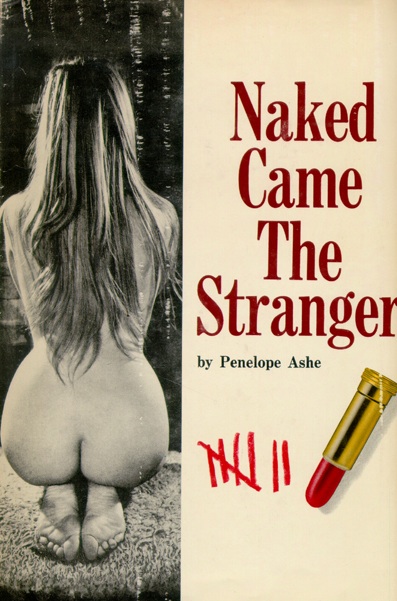
Naked Came the Stranger

Novel Spaces is in its 10th year! Over the coming months we'll be featuring some of the most popular posts from our archives. This one was first published December 18, 2011. 


By Kevin Killiany

At some point during discussions of the viability or validity of independent publishing someone critical of the concept is bound to opine that traditional publishing houses act as quality filters, ensuring that only books worth reading get published. Which will usually cause someone on the other side of the fence to bring up Nicole "Snookie" Polizzi's "A Shore Thing." Fact is, you don't have to cite extreme market miscalculations like that one. The old Barnes & Noble in Wilmington was a few blocks from UNCW and had a café friendly to writers and college students, complete with wooden tables for four and a long counter with stools across the front where I did much of my early writing. (The new, trendier B&N is nearer the beach and its café features little round tables fit for two coffee cups and a biscotti; no counter.) One of the pleasures of writing there was that at any time I felt overwhelmed or discouraged, I could stroll through the racks and find a dozen books worse than anything I'd written published by major houses.

However, as bad as some traditionally published books are, in every case they represent a storyteller's sincere effort to master the craft and an editor's belief in the quality of that effort. (Or, in Polizzi's case, the belief that a tell-all book disguised as a novel by a TV reality show personality would be of interest to someone, anyone.) You might take it as a given that no one ever set out to write a bad book. And you would be wrong.

Back in the late 1960s the bestseller lists in the USofA were dominated by works by writers like Harold Robbins, Jackie Collins, and Jacqueline Susann. Vapid novels about morally bankrupt people who would make the characters of Gossip Girl look like philosophical giants exploiting everyone around them, having sex at the drop of an innuendo, drinking and drugging to ridiculous degrees, and either coming to a bad end or finding eternal happiness as a result. This was the era of "Valley of the Dolls" and "Portnoy's Complaint." By the standards of today's more erotic romances, the sex was pretty tame, but it was shocking stuff forty-five years ago.

A newspaper columnist named Mike McGrady became so fed up with (or so alarmed by, depending on the source) the "sex sells" mentality he saw driving American culture that he decided to do something about it. He put together a team of twenty-four fellow journalists for the sole purpose of producing a horrifically bad novel with lots of sex and trying to sell it. The basic premise for "Naked Came the Stranger" was a husband and wife who are NYC celebrities with a morning radio talk show. The wife (Gilly) discovers her husband (Billy) has been cheating on her and decides to even the score by having sex with as many married men in their upscale Long Island community as possible. Her goal is to corrupt and seduce every archetype of civic and moral leadership she can find. Rules for writing were purple prose throughout (example: Gilly's breasts are "pendulums of passion swinging in the winds of lust") and two sex scenes in every chapter, with the sex act itself depicted mechanically but with awkward euphemisms for the clinical details. None of the writers knew anything about what the others wrote and McGrady required rewrites if he detected any literary merit whatsoever. Gilly's appearance and body type change with every chapter, though she is consistently beautiful. (There's a scene wherein the sight of her naked breasts causes a homosexual man to become heterosexual.)

In 1968 a relative of McGrady's posed as new author Penelope Ashe marketing "Naked Came the Stranger" as her first novel. The book sold to the first major house she
approached and was published in 1969, becoming an instant bestseller (the picture of the naked woman on the cover probably helped). Book reviewers in major markets, including Stern, Le Monde, and the New York Times, used phrases like "sizzling" and "thought-provoking" and compared the ersatz Penelope Ashe to John Updike and Philip Roth. She appeared on talk shows, was interviewed about sexual liberation in women's magazines, and advised aspiring writers to impale themselves on their typewriters. After a few months the authors appeared en mass on the David Frost Show, explaining their reasons for the hoax and expressing some embarrassment that their intended pillory of "sex sells" novels was now outselling its competition. The revelation of the hoax actually triggered a jump in sales fueled by widespread speculation the novel was in fact a roman-a-clef and that the adulterous men in the Long Island community were nationally known public figures.

Naked Came the Stranger is more fun to read about than it is to read. In fact, reading it is a chore. Not only are the mores of the period awkward by today's standards, the book itself is deliberately and methodically awful. Oh, there are moments. Like when Gilly asks a pornographer where he gets all his kinky ideas and he replies: "Like every other writer, I draw from the human condition." But on the whole, McGrady did a thorough job of eradicating anything of value from the manuscript.

Naked Came the Stranger was a bestseller not because of its excellence, but because people will read what they want to read despite what any arbiters of literary taste say or gatekeepers of excellence do. And "gatekeepers" includes the band of hoaxers who were sounding the alarm about the degeneration of American literature. The trend they were protesting matured, outgrew its "look what we can get away with" stage, and diversified into the spectrum of spicy, sensuous, and erotic romance novels that today makes up the lion's (lioness's?) share of the world fiction market. All of which says a lot about the role of traditional publishers, and the potential future of independents.

(More about Naked Came the Stranger in Museum of Hoaxes and Wikipedia)


Monday, October 22, 2018

Write a Novel in a Month

Novel Spaces is in its 10th year! Over the coming months we'll be featuring some of the most popular posts from our archives. This one was first published September 19, 2010. Enjoy!


By Kevin Killiany

National Novel Writing Month (aka NaNoWriMo) is rapidly approaching. Literally at the speed of time. Every November tens of thousands of writers strive to produce a 50,000-word manuscript in thirty days. Why 50k?* Because in publishing, that's the official definition of a novel. Today 90,000-word novels are common, but they are a recent development. (Or at least younger than I am.) Take a look at your copies of The Old Man and the Sea and Brave New World. Time was most novels were that slender. Though most were not that good.

More than a month devoted to writing, NaNoWriMo is an active internet community – something of a global glee club – with daily encouragements, prods, and reminders to keep you going. In many cities NaNoWriMo writers get together one or two nights a week for group writing sessions that take the loneliness out of what is usually a solitary pursuit.

The purpose of NaNoWriMo is not to produce great literature, though creating great literature is not discouraged. The purpose is to get writers – especially writers who do not think they have enough time for writing – to sit down at the keyboard and write. And in that respect it has been a great help to me over the years.

I have NaNoWriMo-ed five times – the last in 2006 – and twice finished the month with a manuscript of more than 40k words that told a story with a beginning, middle, and end. None of these manuscripts are ready to be submitted to a publisher. And of the five, only my last will become a novel some day. Right now "Dram Rock" is a 42k outline of what will be the second novel in my Coastal Carolina mystery series.

Chris Baty's No Plot? No Problem!, the book of all things NaNoWriMo, has been on my essential reference shelf for half a decade. (Though it's not at the moment; I loaned my copy to an aspiring romance writer who's preparing for this coming November.) While much of Baty's writing advice is NaNoWriMo-specific, there are clear lessons on discipline, priorities, and time management that should be in every writer's tool kit.

One example, useful to anyone who's ever lost an evening of writing to puzzling over how to fix a scene that doesn't seem quite right no matter what you do: Use bold. (Actually, Baty suggests italics, but bold is easier for me to spot.) When you're having problems with a scene, or a bit of dialog or a chapter ending, highlight the troubling section by putting it in bold to remind yourself the problem is there and get on with your writing. That way you do not lose your creative momentum and get more words out of your head and onto the paper where you can work with them.

Don't go back to your bold sections until either your subconscious – which never stops working – has provided you with a solution or you finish the rest of the manuscript. I work in Word, so the easiest thing for me to do is view my ms in "print layout" and shrink the images to 25%. That saves paging through looking for areas that need work because the bold passages show up as dark smudges. I just click on a smudge, go to 150% (I have old eyes – large print is my friend), and get to work fixing whatever needs fixing. Sometimes I can't think why I bothered to highlight the section. Other times the solution is obvious. Usually it's something in between. But no matter what I find, I'm able to make clear editorial decisions quickly because I did not waste time trying to edit when the words were flowing.

If you have trouble using your writing time productively – or if you have trouble finding writing time at all – I highly recommend taking part in NaNoWriMo. It's a fun and challenging way to prove to yourself you can overcome the excuses and get words on paper. Can't go wrong investing in Baty's book, either.
Either will show you you've got more time to write – and can write more in the time you have – than you knew.

* = I originally had the word count wrong. I corrected it when a commenter pointed the error out.

Sunday, February 11, 2018

Outlining by the Seat of Your Pants

Every now and then, this quote of JRR Tolkien shows up as part of a meme that claims that all great novels are the product of inspiration, not planning and outlines. Not surprisingly, professional writers have a technical term for that theory. I’d share it with you, but it involves words I don’t use.
No outline, just starting to write and letting your story dictate where you go is not the hallmark of a great novel. It’s the beginning of an unfinished novel.
Because while it’s true not all who wander are lost, it’s also true that a journey without a destination never ends.
I’ll be getting back to what JRR Tolkien was really doing in a bit.

The opposite end of the outline spectrum is, I think, well represented by K.M. Weiland. I have read two of her books, the paranormal romance Dreamlander and the writing how-to Outlining Your Novel. (I read the second because I was researching writing methods while working on my MFA and read the first because I wanted to see how a novel by a person who wrote like that read.) Weiland also writes historical, dieselpunk, and Christian romances – but her primary focus these days seems to be teaching writers to outline. Weiland advocates everything – every bit of character development, every word of dialog, every setting, every action, everything – be thoroughly and formally outlined before the first word of the novel or short story is written. As I recall in Outlining Your Novel she states she never writes anything – including blog posts – without first developing an outline.

The reason she outlines everything down to the heroine’s dental work, brussels sprouts fetish, and stance on solid waste management is it saves time. That sounds counterintuitive, but what she means is, if something new occurs to you or you discover a problem with the plot while planning things down the nth detail, it’s far easier and quicker to change an outline than it is to rewrite a manuscript. Because once you’ve hammered everything out in your outline, writing the novel itself is just a matter of typing up an expanded version of the outline.
As is common among outline-only writers, Weiland refers to writing without a detailed outline as “pantsing” – a pejorative derived from the aviation expression “flying by the seat of your pants.”
Before the development of instruments that worked on airplanes pilots navigated and made decisions about altitude and airspeed, etc., by observing their surroundings and using their own judgment. In the 1930s, when radios and compasses were becoming common on planes, a skilled and experienced pilot who could navigate as well or better without instruments was said to fly by the seat of his pants.
When outliners say “pantsing,” however, they don’t mean a professional effectively applying skills earned through years of experience, they mean someone starting out with no idea where they’re going or how to get there. This assertion inspires me to other words I don’t use.
(On the other hand, in researching her work I discovered Weiland’s dieselpunk heroine is named Jael, so we have more in common than I thought.)

Of course every novel has a frame, a skeleton, an outline that holds everything together on on which everything else hangs. That frame can and will grow and change as the novel progresses, as the writer becomes more comfortable with the characters, or discovers new possibilities within the plot, but it’s there. And, to exactly the same degree that it's true all nine-year-olds wear size nine shoes, the frame is the same for every writer.

My first love was theatre – I wanted to be an actor and playwright. Turned out I was really bad at one and stunningly mediocre at the other, so I became a photographer (because one of the few things all the actors around be would pay for was new headshots). When I began writing fiction, a few playwrighterly habits informed my method. The most pervasive – or perhaps most noticeable – is dialog. My first draft of every scene is always – or almost always – dialog. Actors on the stage trading well-timed lines. Later the director in me will add blocking and business for them to do while they speak, but I first see the scene through the back and forth of words.That “scene” is telling – because my stories are always told in scenes and acts – I’ve never written a chapter. Writing in scenes lends itself to storyboarding – which makes sense since storyboards were developed for keeping track of scenes in a play or movie. My early organizational notes or brainstorming sessions always involved boxes with circles and arrows on graph paper.
I still do that on occasion, when I need to work through complex plot developments that involve many moving parts, or when I’m roughing in a short story on spec. But writing media tie-in reshaped my process.

There are variations between intellectual properties and editors, but broadly speaking, in media tie-in writing the project editor puts out a description of the project and invites writers to submit pitches. The pitch is a paragraph or so snapshot of how the writer would handle the project. For short pieces, under 20,000 words, the pitch is often enough. For novels, if the editor likes the pitch, they’ll usually ask for a treatment. A treatment is essentially a brief narrative outline explaining the high points of the novel’s arc. Treatment lengths vary and are often a function of the complexity of the project and how familiar the editor is with the writer’s work, but for a 90,000 word novel, a 4,000 to 5,000 word treatment would be about average. I’m a minimalist when it comes to treatments – the longest I've written (for the 93,000 word Wolf Hunters) was 3,600 words. On the other hand, my friend Ilsa Bick had a reputation at Pocket Books for submitting 30,000 word treatments for 90,000 word Star Trek projects. Where I once covered graph paper with graphics, I’m now more likely to write myself a treatment – a reminder of where I meant to be going that usually includes suggestions for alternate routes.

Most of the professional writers I know, those who produce novels regularly, use some variation of this treatment method. They know where they’re going and, broadly, how they’re going to get there – their map may be a few sentences or a few pages or a few thousand words or all in their heads, but it’s the frame, the spine, on which hey hang their story. And from that point, like the skilled and savvy veteran pilots for whom the phrase was coined, they take their experience and craftsmanship and – keeping a sharp eye on conditions around them and developing ahead – fly by the seat of their pants.

I spent one writers’ workshop, many decades ago, with David Weber, whose approach was significantly different. For each of his Honor Harrington novels (and other novels, I assume, but at the time he was revising Honor Among Enemies, aka HH6) he wrote a 20,000 (or so) word “bible” for the novel. Major players, politics, worlds, how the war (which ran through all the novels) was going in areas not addressed in the novel, etc. In other words, he had no real outline for the novel, but he knew exactly what was happening where and when and could weave it in without having to pause in his storytelling to figure out what made sense in the larger scheme of things.

Which brings us back to JRR Tolkien and his outlineless Lord of the Rings.
JRR Tolkien began inventing the world of the Middle Earth – complete with languages, mythologies, and cultures – in 1917. He was a linguist and a student of both theology and mythology, and he devoted a lot of energy and time to creating a world out of the things he knew and loved. In 1932 he wrote The Hobbit. No outline, but fifteen years of thinking about the characters, mapping their world, developing and refining every aspect of their personalities and cultures made them all so familiar to him that he didn’t need one. He then spent another fifteen years writing (and rewriting because his friend CS Lewis kept demanding better of him) The Lord of the Rings.So, if you're willing to devote thirty+ years to the project, chances are you, too, can produce a novel powerful enough to shape generations of western fantasy without an outline.

So what’s the best way to do it? For you, I have no idea. For me, that’s still evolving - it's something I'm still discovering and refining. Which is exactly as it should be.

Wednesday, January 10, 2018

Don't Think about Your Reader (But Do Care about Them)

During my sabbatical from Novel Spaces I toyed with ideas for a year’s worth of columns – and often resolved to write them while the were fresh in my mind. I did not. And this morning, when I realized my first column for 2018 was due, I was caught completely flat footed.

While flapping in circles wondering what to do, I came across some old advice about never thinking about your audience or market when you write, just write! I realized I had something to add to that. Because, like all absolutes, it’s not really.

My current novel series, Dirt and Stars, is young adult science fiction. The protagonists’ ages are 15 to 16 in book one, Down to Dirt, and age through 16 to 18 over the course of books two and three, Life on Dirt and Rise from Dirt. The market for YA fiction is, of course, everyone, but publishers usually target readers a year or two younger than the protagonists – in this case, 13 to 16. This perception of who will be reading the novel impacts how the editor and publisher feel topics like cursing, sexuality, emotional trauma, social issues, and other potentially sensitive issues are addressed.

And they’re right to be concerned – I live and have taught in a North Carolina county where Sherman Alexie’s Absolutely True Diary of a Part-time Indian is banned from public schools and libraries because a 15-year-old boy describes the joy of – not the act of – masturbation. The novel intelligently depicts eating disorders, racism, poverty, alcoholism, suicide, and cultural identity – topics that should be addressed and discussed in middle and high schools. But that one paragraph has kept it out of untold numbers of school districts – which translates to the loss of tens, if not hundreds, of thousands of copies sold to English classes.

Dirt and Stars is written in multiple first-person, told through the frequently-intersecting journals of five characters. Mara Duval of Tombaugh Station must write about her visit to dirt (Earth) for academic credit; Jael Alden intends to do great things and her father (half jokingly) told her to keep a record so she’d have the facts right in her memoir; Beth Duval writes because her best friend Jael writes; Lije Bronislav dreams of being an entrepreneur and believes great ideas can come from random observations; and Fatima Kielani has a social communications disorder and records her daily interactions for discussion with her therapist.

For thirty years I taught in an alternative high school, or taught “those kids” – the ones in the self-contained room at the end of the hall – in a traditional school, was a community support case manager, and did in-home and community “coaching” for family preservation services. When you’ve been around teenagers long enough that you’re part of the furniture, they’ll converse about all kinds of things in front of you. (Especially if you cultivate the impression you’re a little hard of hearing.) I drew on the things I learned and observed working with kids in crisis when creating my characters, how they thought and felt and how they spoke. And my first try was pretty upsetting for everyone who saw it. Eventually I figured out that realistically depicting what I’d experienced didn’t work for my story – all of my characters came from stable homes, were clean and sober, and didn’t have kids of their own. I had to draw on what I knew, not reproduce it; be authentic without being graphic; and make my people accessible without being generic.

Cursing, as Maggie King wrote so well about on December 22, Do You Let Your Characters Swear?, was an issue. Science fiction tends to attract younger readers and has a tradition of using made up curses. Firefly gave us gorram an evolution of “goddamn” and Battlestar Gallactica simply replaced “uc” with “ra” to give us the ever-popular Frak!
There’s one actual curse word in Down to Dirt, and it’s there for legitimate effect. The rest of the time the dirt kids say “crap” a lot and Mara says “blow” – which is, you guessed it, a made-up curse word. The trick was making this work without being too cute about it. I imply, but do not explicitly state, that while they only say crap "on camera", they use other words in other situations. And, about a third of the way in, after Mara vehemently exclaims “blow”, I have her explain it in this entry from Beth’s journal.

“Why do you say ‘blow’ like it’s the f-word?” I asked.
Mara looked at me sharply ... then the corner of her mouth twitched. “Because it is like the f-word,” she said. “Only not about that.”
“Oookay,” I said after waiting for her to add something more. “How is it like the f-word only not about that?”
“A blow is a catastrophic decompression,” Mara said. “Like a hull breach, or when you’re outside and your EVA suit is punctured, or the seals on your waldo rupture.”
I didn’t know what a waldo was, but evidently having its seals rupture in space was really bad.
“So you’re saying that if someone in space has a blow,” I said carefully, “they’re pretty much f-worded?”
“Pretty much,” she agreed solemnly.
Jael laughed. “Beth, you are the only person I know who says ‘f-word’ when there’s no one around.”

Conversations about sex can be both realistic and PG if neither character is sure of the other’s limits or expectations (or orientation) and they’re both sounding each other out without being explicit.

Late in Down to Dirt Mara is sexually assaulted. That scene went through more rewrites than the rest of the scenes combined. In the final iteration I describe just enough of the physicality to give context, but focus not on the act but on Mara’s panic—evoking the horror without detail. In the end, I think this worked better than any graphic description would have. And, relevant to the point, it made the scene accessable to the reader who might be overwhelmed (or offended) by a rawer telling.

So. Don’t worry about your reader when you write? Maybe not in the first draft, when you’re getting everything out so you can work with it. But at the same time, you should be mindful of the person listening to your story. Not readers in the generic – that’s the publisher’s concern, when they’re marketing the story you wrote – but that one reader you want to read, remember, and share what you’ve given them.

Sunday, June 19, 2016

What we tell the reader.

Late in the day as I type this. Sunday, Fathers’ Day here in the USofA, and I wasn’t as focused on producing my monthly column as perhaps I should have been. (Which, in my native southern dialect is rendered: might should've been.) Local family members produced my favorite dinner – grilled steak, grilled veggies, potato baked on the grill, crunchy rolls, and un-grilled salad. My son - who these days lives too far away to get down here and celebrated at his home with his wife and daughter - posted a testimonial on Facebook about what my example had taught him about being a husband and father. Mostly it had to do with responsibility.

This got me thinking about responsibility as a writer. Not the responsibility to meet deadlines or produce columns in a timely manner, that’s more a reliability issue. I mean our responsibility to use our craft well. Not just in telling a story, but in the stories we tell. Our words have impact, as anyone who’s been furious at a fictional injustice or mourned the death of a fictional character can tell you. We as writers can have unintended effect on our readers.

I was discussing this online with fellow writer Jason Hansa a few weeks ago. Jason and I have written paired stories before – the same battle told from opposing sides in self-contained, stand-alone narratives for BattleCorps, an online publisher of military sci-fi. (How a radical left-wing tree hugging do-gooder built a name and career in military sci-fi is a topic for another column.)

This time around we are both part of a shared-narrative anthology: a chronological collection of stories following a single BattleMech (think giant, walking tank) from its construction through its career in a dozen militaries and two centuries of war until its eventual destruction. Two dozen combat stories would be a bit monotonous, so the battle stories are leavened with an espionage story (mine), a medic’s story, a mechanic’s story, a murder, a romance, a divorce, and – I think – a conscientious objector. All of us on the project keep in loose contact to ensure continuity and keep the through narrative building from story to story.

Jason and I were chatting on FB, as is our wont, about elements of our respective tales. I was debating how explicit the torture of a civilian should be and he was wondering whether his recipe for an improvised weapon should be accurate.

“After all,” he said, “we don’t want to give our readers any ideas.”

“Right,” I agreed. “We’re not writing erotica.”

Later, while working on the second volume of my Dirt and Stars YA series it occurred to me that giving our readers ideas is a lot of what we do, no matter what the genre.
In my story of how young people deal with exclusion, elitism, racism (from both sides), and trauma I strive to model for readers who have hopefully not yet been damaged irreparably by these forces how to get through one undramatic, heroic, baby step at a time.
In my military sci-fi I tell stories of courage, loyalty, commitment, sacrifice, integrity, and fear in which combat – impending, happening, or in aftermath – provides context; is the medium through which these themes are examined.
Romances – the ones I like – are about identity, integrity, and commitment. (So, like military sci-fi with fewer ray guns.)
Crime – with the exception of cozies and puzzles – is often about victims overcoming trauma, defenders sacrificing for the sake of others, coming to terms with self, or redefining/rebuilding self in the face of change.
This list could go on for quite a while, but you see the point I’m making.

Of course a lot of stories are just stories. Entertainment. Escapes. Respites.
But even the lightest tale carries in its narrative DNA elements that the writer cannot help but pass along to readers. Assumptions about culture, right and wrong, good and evil (which is often completely different), the value of humanity – a hundred elements of ourselves and the people, the culture, and family that shaped us.
It’s no good trying to not pass along our intellectual/spiritual/personal DNA. It’s who we are and the only way to keep ourselves off the page is to never write. But being aware of what we’re doing – of what parts of us we share and how we share them – can give our writing a focus and effectiveness beyond the mechanics and art of our craft.

Friday, May 20, 2016

Kevin's Picks: Books on Writing

I’m glad this month’s topic was not “the best book on writing” because there is no such beast. No one can ever write about how to write because there’s no one way to write. All a writer can do is share the way they write. (Or “ways” – some of us approach different projects differently.) If naming one best book on writing is impossible, naming one favorite book on writing is next to impossible. No one else is me, therefore no one else is going to write a book about writing that contains everything I like and nothing I don’t. But there are many books that have things I like and have given me tools I use every day.

That use of “tools” is important. I view what I do as a craft, not as an art. Art is interesting, art can add grace notes to one’s life, but craft always has a greater impact. Which is more likely to be an integral part of your life, a Dali painting* or the absolutely perfect armchair for reading? I try to make every story that perfect chair. (*The question presupposes you cannot sell the Dali painting for millions of dollars.)

This blue collar craftsman’s attitude towards storytelling means there is a slew of writing books I decidedly do not like. Books that treat writing as though it were some mystical journey of self discovery, for example. I’ve been a crisis intervention counselor and mental health case manager for years; if your looking for a mystical journey I recommend Jung. (Actually, I don’t. Jung’s certainly mystical, but that’s about it. If you want your journey of self discovery to get anywhere I recommend cognitive behavioral therapy.) Nor do I have much patience with the notion writing is solely about following your heart. Unless you want to end up in a hot, dark, wet place getting shoved by your lungs every time you take a breath. That being said, you can exorcise (and exercise) a lot of demons through writing, but again that has more to do with therapy than writing. [And yes, before someone points it out, the energy of those internal demons can inform your writing; but as narrative impetus, not narrative element.]

Rather than produce a 3,000 word column analyzing what worked and what didn’t work for me from the myriad books on the market, I’m going to list the books I keep. Actually, I keep all my books. These are the books on writing I take down and reread occasionally – none is perfect, there are parts I don’t agree with in all of them, but on the whole worth your attention.
The ones that are in reach of my writing table, in the order my eye falls on them:

Lawrence Block. Telling Lies for Fun and Profit; Writing the Novel (1985 version, I know it’s been rewritten); Spider, Spin Me a Web. (There are more, I recommend everything he’s written on writing.) Gerald Weinberg. The Fieldstone Method. Cheryl Klein. Second Sight. (Writing children & YA fiction by an editor of the American editions of Harry Potter.)
Francine Prose. Reading Like a Writer (More about understanding storytelling than a nuts & bolts how to.)
Albert Zuckerman. Writing the Blockbuster Novel (The useful parts are reading the various iterations of Ken Follett's narrative outline of The Man from St. Petersberg as he refines and focuses the story.) David Maas. Writing the Breakout Novel On the fence with this one. The intent is writing a novel that will sell because it stands out from the crowd while fitting into the market. Useful parts are about finding your own, original take on popular story tropes.) Ron Carlson. Ron Carlson Writes a Story All about the process and craft of writing a story. I don’t do everything the way he does, but I like his attitude and reading about how he writes is enlightening. I cannot write or speak about my own journey of becoming a writer without mentioning Dean Wesley Smith and Kristine Kathryn Rusch. These two physically beat sense into me (okay, metaphorically physically) and turned me from a dreamer into a working, published writer. Their sites are full of useful information on writing and supporting yourself as a writer. Go spend time studying their sites.
Kristine Kathryn Rush Dean Wesley Smith

Sunday, March 20, 2016

A Game is not Collaboration (writing for RPGs)

A few days ago Dayton wrote a column about years of writing in collaboration with some other guy named Kevin. As I commented then, I’ve never successfully collaborated on novel the way Dayton and the younger, better looking, and more talented Kevin do. Though I did come close a few times.

When writing novels in the MechWarrior series I did remain in constant contact with other writers. Each of us kept the others informed about plot elements that may affect their novels and made sure events in ours didn’t screw up events in someone else’s – but none of us was directly involved in anyone else’s work. Writing for the Starfleet Corps of Engineers series was much the same, though communication between writers was not as direct. Both cases were more about situational awareness than actual collaboration. Last year fellow BattleTech writer Jason Hansa and I completed a tandem story project that was almost but not quite a collaboration. Together we worked out the general shape and flow of a series of clashes between opposing forces, then he wrote a story of the conflict from one side without any input from me and I wrote one from the opposite perspective with no input from him. Each story stood on its own – and sold to the publisher as a stand-alone —but the two together formed a deeper and more textured narrative. (Jason and I are in currently in the midst of the “working out the general shape and flow” stage for a similar project.)

I’m excited about the fact a project I really enjoyed working on has just been released. Transcendent’s Edge (TE) is a campaign book for the Valiant Universe Roleplaying Game
(VURPG). [I tried three times to explain the universe of Valiant Entertainment in less than 1000 words and failed. I’ll post a link to their website at the end of this column.] An RPG campaign book of this type relies on artists, game designers/developers, and writers. It’s the role of writers that I want to focus on today. There were six writers on the TE project who between them wrote about 76,000 words (about 17,000 of which were mine). Even though we were all working together, what we were not doing was collaborating.
I know 97.3% of our readers are prose or graphic novelists and writers of short fiction. I also know others – like me – are still figuring out what they’re doing as writers. (2.7% have mistaken us for a DIY remodeling site.) So I thought I’d spend a few hundred words explaining what goes into writing for a game and being part of a writing team.

The first a writer hears of a project like this (officially, not through the rumor net) is a general invitation to pitch from the publisher. These invitations are sent to all writers who have written for or expressed an interest in writing for the publisher and/or game and have signed a non-disclosure agreement. In the case of TE the invitation specified an evil "black site" facility buried deep beneath Alcatraz Island that is consistent with all present-day Valiant Entertainment characters (Which range from a laser-eyed goat to the spirit of the earth to an immortal poet to a sentient suit of armor to... well. The trick is having hard science, psychic powers, living mythology, and ersatz Vodun running side-by-side without contradicting each other.) The Facility had to be deadly, able to change shape, and 99% impregnable. Required were descriptions of the facility from the viewpoint of each Valiant character, a history of the facility, an overview of the “real” world in the Valiant Universe, write ups of the major characters and factions, thumbnails of minor characters, traps and obstacles within the Facility, and event briefs (short, quick-play scenarios that didn’t require a full campaign) for each Valiant storyline. The campaign book would open with a short (3,000-word) story to launch the campaign.

Writers interested have two weeks to pitch – i.e., send the game developer their ideas on how they would handle each part of the project they would like to work on. A few weeks later writers whose pitches resonated get their assignments – which, if the developer liked their thinking but not their specific idea, may have nothing to do with what they pitched. [I, for example, got a faction and character set for whom I’d never written.] I also got the history of the Bay Area and several districts of San Francisco (which, I was surprised to learn, has gone through some subtle changes since I left in 1978), the various real and imaginary branches of the military, and ten of the forty deadly “trap” rooms within the Facility.
(Proud dad moment: The final design of the Facility incorporates almost everything my son Anson suggested.) I also landed the coveted opening fiction gig.

Once the sections have been assigned, the writers have a six weeks (on average) deadline for getting their stories, write-ups, event briefs, scenarios, etc., in to the editor. A few weeks later we get any rewrite notes and a deadline (usually two weeks) for final revisions.

Is writing to the needs and nature of an existing intellectual property, one owned by others, constraining? If you find the rhyme and meter of a sonnet unduly constraining to your poetry, yes. If, on the other hand, you find adapting to and incorporating the structure of the sonnet challenging, no. It’s not for everyone. But if you like the idea that on any given evening thousands of role players are creating their own adventures using characters and settings and challenges you’ve given them, game writing offers satisfactions unlike any other field.

(As promised: link to Valiant Entertainment.)

Tuesday, January 19, 2016

Living on Dirt

So. I have news. I waited until after the last second – sixteen hours after the last second, to be precise – to post this column because I was hoping something scheduled to happen sometime this week would happen before I did. It hasn't. (But when it does, I'll edit to add a link.) First, four bits of context. (And no, I'm not burying the lede. When the link is up it'll be at the top of the column and all this framing information will be a footnote.) First, as somewhere between 42% and 63% of you know, the many-faceted relationships between differing races and cultures – in general, of course, but more often the interactions between individuals of different races and cultures as each copes with the mysterious "other" – is a subject that fascinates me. I have been half of an interracial partnership for thirty-four years and the father of people proud of their blended heritage for thirty-two to twenty-four years, depending on the individual. (And, for a bit over two years, grandfather of a dynamic young lady whose self image has not yet expanded beyond certainty she's the center of a loving universe.) I first met Liane and the other founders of Novel Spaces in a romance writers' group because my wife wanted (still wants) me to write interracial romances. If nothing else were going on, I'd have written this month's column about Conrad's Heart of Darkness , which I taught decades ago, and the recent what-in-God's-name-were-they-thinking travesty of A Birthday Cake for George Washington. Second, science fiction is my core genre. I love mystery, historical, fantasy, and enjoy sweet-to-'R'-romances, westerns, and contemporary, but my reader's heart imprinted on science fiction before I understood the concept of genres. More specifically, while I love Golden Age raygun-and-tentacle scifi and what are probably more properly called science fantasies (like Star Trek), alternate histories are at the center of my scifi addiction. What would have happened if: ...there had been no pandemic to wipe out 92% of North America's population two years before the Pilgrims arrived? ...Emperor Constantine had never converted to Christianity? ...Alexander the Great had lived another thirty years? Many years ago I posited a world in which FDR decided against federal funding for research into the atom bomb and chose not to run for a third term (both of which almost happened). As an exercise in world building I tracked the consequences of FDR's third and fourth term decisions, as well as those of his VP and successor Harry Truman, and explored how events would have unfolded differently. In my alternate world James Byrnes is elected President and the Dixiecrats – the 1940s Democratic progenitors of today's Republican Tea Party – become the dominant political party. Without nuclear weapons WWII in the Pacific would have lasted at least a year longer, with much of Japan razed by the Allied invasion. And the economically pragmatic Byrnes, not distracted by the idea of weapons, would have funded nuclear research that led to the cheap, clean nuclear power plants envisioned by writers of the 1940s and the Golden Age mainstay of planetary exploration, "fusion rockets" (the warp drive of their era). Everyday reality would include practically free energy, efficient nationwide mass transit, and colonies on the Moon and Mars by 1980. But the politically paranoid Dixiecrats and their successors would also have instituted tighter government control over communications, information, and technology as a defense against communism and other anti-American forces. Jim Crow laws would have lasted for decades longer and the Civil Rights Movement would not have made significant progress until the 1990s. Through all of this I had an amorphous idea for a novel about that delayed struggle for equality that never quite crystallized into a solid plot. I'm a fan of young adult fiction and a big believer in the power of the genre. (As evidenced by this column from 2012: Juvenile Fiction.) Not only is YA the gateway through which most young people become readers, the clarity with which they (the good ones) address complex personal and social issues make them accessible to adults who are not normally readers (i.e. Harry Potter and Hunger Games). From Ann of Green Gables to The Absolutely True Diary of a Part Time Indian, YA is my go-to genre for relaxation. A few years ago I was invited to submit a story to young adult sf anthology on pretty short notice. I floundered for nearly thirty seconds before thinking of my alternative history continually in progress. I wrote a story about a girl born and raised on a space station being required to visit her cousins on 'dirt' – which is what the hyper-elitist white folk in the Space Service called Earth (the Earth folk are 'dirts'). Things are worse, better, and generally completely different from what she'd been raised to expect. The story wasn't accepted, but the YA approach to my civil rights in the twenty-first century concept felt right. Over the next year I developed the narrative outline for a novel about a hyper elitist teen space girl so freaked out by being on dirt she's afraid to touch anything, her egalitarian dirt cousin, and her dirt cousin's best friend, a young woman who is gifted, black, and determined to break the Space Service's color barrier. It took me another year to actually write the novel. (Actually, the writing was impossible until I let go of the idea that everyone's problems could be solved in one novel and set 2/3 of what I had aside for later volumes.) Finally, I am not a publisher. I did want to be, did intend to be. I attended every training and webinar on publishing I could find. With the help of a SCORE mentor, I work out a solid business model. I did, in fact, form Kvaad Press in 2011. But, as evidenced by a forty-year career in human services, including education, personal care, and mental health, I do not have the heart of a business person. Nor did I know any business-minded people who were willing and able to invest the knowledge, time, and money to keep Kvaad Press going. I've been writing professionally for a decade and a half. I have novels, anthologies, websites, even a coffee table book to my credit. But all of my work has been in media tie-in. Everything I've sold has been linked to a television show, movie, or game – intellectual properties that I do not own. Figuring out what to do with something that was mine, that I wholly owned, was uncharted territory for me. I knew I didn't want to go with a major house, where I'd be an anonymous cog, and I knew I had neither the skills nor the temperament to succeed as a total indie, which left.... what? I began searching for a small press that treated writers like partners, or at least team members. Found a lot of predators but found a remarkable number of good people, too. One such outfit is Evolved Publishing. With whom I've signed a three book contract. The first volume in my Dirt and Stars series will be hitting the streets in July.

Saturday, December 19, 2015

A Few Notes on the "Rules" of the Craft

(Marissa wrote an excellent column on lessons learned in the writing trade a few weeks ago. If you haven't read it, yet, you should. You can go ahead and do that now, if you'd like. I'll wait. My column this month is not so much a response to hers as a footnote.)

I am by nature contrary. Most of the interesting stories from my childhood begin with someone telling me I couldn't do something.

Early on in my career - as in before my first sale - an editor who had taken several fledgling writers under his wing (including, if memory serves, our own Dayton Ward) told us that how a story opens determines whether the reader (or, more importantly, the acquisitions editor) will continue reading past the first page. Among several tips on writing openings, he told us that we should never open a story with talking heads (that is, people talking with no sense of place,
context, or action), with the character waking up, or with a description of how bored and boring the protagonist is before whatever exciting, life changing event the story is about happens. Me, being me, proceeded to write nothing but stories that began with talking heads (which actually played to a strength of mine, more on that in a moment), the narrator waking up, or the character bored out of his or her skull wishing something would happen.

The first short story I sold opened with a talking head – a guy dictating his diary and random thoughts to a recorder. My second sale opened with the narrator waking up. My third with, you guessed it, one hundred and thirty-seven words of the lead character literally siting at his job wishing something, anything at all, would happen to end the monotony of his existence.

Do these three sales prove that rules are meant to be broken, or some similar bit of foolishness cosplaying as wisdom?
Nope.
They prove that I'm hard headed. Over the three years it took me to sell those three stories, I wrote and submitted over forty more that did not sell. If I hadn't insisted on doing things my way – which is to say the opposite of what I'd been told – I almost certainly would have sold more stories and sold my first story sooner.

One thing my early mentor said that I took to heart immediately: The reader does not owe us, the writer, a chance. Or the benefit of the doubt. Or even one second of their time – we can't ask or expect the reader to bear with us while we get going. We owe the reader the best story we can write, delivered in the most engaging and entertaining way possible.

Here's the 'more in a moment' thing about talking heads:
Dialog is the heart of every scene (or monologue, if the person is talking to herself). I say that because I started out to be a playwright - which is all about telling a story through the words of people talking on a stage. My first, rapidly jotted draft of a scene is almost always dialog - quotes with an initial to identify the speaker and the rare note on scene or blocking or business. Later I fill in the specifics of where they are and what they're doing. More than one writerly friend who never aspired to playwrighthood has tried this technique and reported that by first going with the flow, the give-and-take of the spoken word helped them "see" the conversation/confrontation as it would play out—which in turn made it easier to structure the movements and setting of the scene.
That's my only original pro tip.

But I'll leave you with a better one:
Don't write what you know. Write what you want to know. Keep pushing yourself, keep growing as a writer.

Thursday, November 19, 2015

Living and Writing in the Cape Fear

In rejecting a story of mine a British editor once wrote that if I was serious about writing horror I needed to "get away from that sunny southern coast and spend a few Februaries in the Midlands." After Googling "February in the Midlands" I decided to quit writing horror. Odds are you've seen a lot of Wilmington without realizing it. Or at least the Cape Fear, as the southeastern corner of North Carolina, where Wilmington is located, is known locally. (The way I heard it, the British naval officer charged with charting this bit of the North Carolina coast in 1662 wanted to call the area "Cape Fair" – but after a few attempted colonies failed tragically the name was updated.) The film industry came to the Cape Fear in the 1980s. One website I checked lists over 300 movies and TV series have been shot here in the last thirty years. Films like Firestarter, Weekend at Bernie's, Bedroom Window, Amos & Andrew, and Iron Man 3; TV shows that have tangled local traffic include: Dawson's Creek, Homeland, Matlock, One Tree Hill , Revenge, Revolution, Sleepy Hollow, and Under the Dome.
[When I was a school teacher I earned money in the summers working as an extra. I'm seen from behind, lost in the crowd, or just out of the frame in seven movies and twelve episodes of three TV series. However, my face does appear in episode seven of Stephen King's Golden Years and peering over Brian Kerwin's shoulder several times during minutes 15-19 of King Kong Lives.]
My wife Valerie and I did not come to Wilmington for the film industry. In fact, other than my summer jobs and the traffic problems, the film industry had no direct impact on our lives. However, movies and a couple of hurricanes did change the city and its culture profoundly – which in turn affected our family.

We came here thirty years ago because of a career opportunity gave us a choice of relocating to one of three cities: Fayetteville, Jacksonville, and Wilmington. A Marine base, an Army base, or a quiet coastal town of about 50,000. Our first child had just turned two and the town on the coast sounded like the best place to raise a family. What we did not research before moving was the racial tensions in Wilmington. When we moved to the Cape Fear in 1982, we found a beautiful city between the Cape Fear River and the Atlantic Ocean that had great beaches, wonderful weather, cheap houses, and the unshakable conviction that the year was 1952. Our first house was a craftsman fixer-upper in a predominantly black neighborhood not too many blocks from the river and withing walking distance of the alternative school where I taught.

Schools had not integrated until the 1970s (15 years
after it became federal law) and out of that turmoil came the Wilmington 10 – nine black men and a white woman who had been falsely convicted (and a decade later exonerated) of arson and assault. Seventy-some years before, in 1898, Wilmington, NC, was the site of the only coup d'etat in American history. Up until 1898 Wilmington was 2/3 black and was a progressive, racially mixed business and political community. That was when an organized army of 2,000 white supremacists executed a carefully planned reign of terror and – in the course of a few days – overthrew the elected government, set black neighborhoods and businesses ablaze, murdered between twenty-five and ninety "troublesome" black citizens, and drove middle class black families, black professionals, and whites who supported the black community out of the city.
[In the 1980s I became friends with Jerry Jacobs, seated far right in the picture, and was a pall bearer at his funeral. In 1998 Valerie and I were part of the 1898 Centennial Commission's "Wilmington Black and White" week of commemorative events; we conducted a seminar on racially blended families and interracial relationships.]

The aftermath of the 1898 uprising formed Wilmington's culture for the next century. It led to the resistance and violence surrounding desegregation and, at least during our first decade here, shaped how people responsed to our family. There was in Wilmington a sharp and uncrossable demarcation between white and black; between haves and have nots.

In 1984 Firestarter, the first of several Stephen King movies shot in Wilmington, put the Cape Fear on the map for major studios looking for a fresh, non-union, location. The studios began expanding and various support and ancillary companies appeared. At the time there was no pool of local workers with the skills they needed, so they began importing their own people from California – people who didn't give a damn about Southern "traditions" like racism (and expected restaurants to serve something other than barbeque, pancakes, or Calabash seafood). I don't think they were unaware of the color line, they just chose to completely ignored it – and with the amount of money they were infusing into the local economy, their behavior was more than tolerated.

In 1996 the Cape Fear was devastated by two hurricanes that hit back-to-back: Bertha and Fran. People came from all over the country to help – particularly from coastal and eastern Texas, where they were familiar with cleaning up after hurricanes. Many of these people liked what they saw (Have I mentioned how beautiful the region is?) and decided to bring their families here and settle down. Between the summer of '96 and the 2000 census, the Hispanic presence in the population in the Cape Fear went from <1 data-blogger-escaped-10="" data-blogger-escaped-2010="" data-blogger-escaped-5="" data-blogger-escaped-br="" data-blogger-escaped-census="" data-blogger-escaped-in="" data-blogger-escaped-it="" data-blogger-escaped-the="" data-blogger-escaped-to="" data-blogger-escaped-was="">
The most immediate impact of Bertha and Fran on our family was flooding – not just inundating our house, though that was serious, but the swarms of Norwegian wharf rats trying to escape the rising river. As soon as we got our house back in shape to sell, we moved out of the city to an unincorporated rural area of blueberry and strawberry farms known locally as Ogden. Our house was the first in what is now a housing development and the only strawberry farm left is a pick-your-own tourist attraction. When we moved here in 1982 there were just under 50,000 people in Wilmington and not quite 100,000 in New Hanover County as a whole. Today, thanks to the film industry and those two hurricanes, the populations are nearly 80,000 and over 200,000, respectively. The old guard of Wilmington, the racists, the southerners, still fight being dragged into the twenty-first century tooth and nail. They aren't yet the minority politically, but they are no longer the driving economic force of the region and they know – despite recent Tea Party advances – that in the long run it's a losing battle.

So how does this environment, my thirty-three years in the Cape Fear, influence my writing? Seeing a city, a region, a way of life, go through such a fundamental sea change, having been part of that change, inspires and informs my fascination with cultures in transition and with how individuals and communities cope with – and either reject or find common ground with – the Other. These themes in turn shape what I write about and how I write about it. Would I be a writer living anywhere else? Certainly. I just wouldn't be the writer I am today.

Wednesday, August 19, 2015

I was just getting to that

Our culture is such that even in the twenty-first century it's assumed that keeping a house clean and orderly is women's work. Under normal circumstances I might think this is a great idea, but I'm a writer so circumstances are not normal.

My wife Valerie works 60+ hours a week in pharmacovigilance (keeping an eye on clinical trials of potential medications to make sure they're safe, accurate, and meaningful). This is intense, detail-oriented work involving riding herd on dozens of test sites, investigating "adverse events" to determine if the trial medication played a role, and keeping four or five mutually exclusive reporting protocols up to date.
In contrast, I work 40-50 hours a week making stuff up. For me this involves research (Warning! Rabbit hole!), staring into space, mapping potential plot threads on graph paper with boxes and arrows, making notes, startling people by blurting random bits of dialog, reading, and occasionally typing.
No surprise, then, that in our household cooking and cleaning are my responsibility.

Valerie has no complaints about my cooking. (Aside from my natural tendency to leave out stand-alone vegetables. Peas in the soup? Fine. Peas sitting on the plate next to the potato and pork chop? Didn't enter my head.) I do homemade soups and stews and Italian things with sausages and American things with beef and southern things with pork and chicken and can go for a while without repeating myself.
Laundry? I do default to washing everything in cold water, normal cycle, but if items requiring special handling are put in the red hamper, I read the labels. (Note: I will not remember the item requires special handling the second or fifty-second time I see it. Put it in the red hamper.)

Where I fail miserably is housework. Remember that roommate in school ("university" for you non-USAers) who didn't notice the stack of empty pizza boxes until it reached eye level? The guy sometimes stalled trying to tell the pile of clean clothes from the pile of dirty? That was me. I have ADD – even when everything is in its place and labeled my world is cluttered and confusing. (In fact, putting things in order can sometimes mess me up.) Actual clutter has no effect on me – it's practically invisible. Think of it this way: When you have trouble remembering to close the refrigerator door while you're standing in front of the open refrigerator, a leaning pile of books and four empty coffee cups on the table don't register at all. All of which might be okay if I lived alone and didn't know any better. However, I don't live alone and I do know what's expected; I just have trouble remembering the basics. (Ex.: House rule: shoes off and in the hall closet first thing. Me: usually shoes off and left somewhere between front door and where I was going.)

What makes all this worse – especially for Valerie – is the cultural expectation I mentioned in the opening sentence. Whenever anyone comes by, the poor condition of the house reflects on her. Because, no matter how many times I tell everyone I do the housework, the assumption is it's her responsibility to make sure I do it right.

What does this have to do with writing? Not a lot.
But it has everything to do with being a writer. Or perhaps being a decent person while being a writer.

It is a perennial lament that writers are not taken seriously by the people around them. The creative process looks a lot like idleness from the outside. It's difficult to distinguish trying to fill a plot hole from frowning at the wall. Family and friends assume the writer – particularly the newish writer – has boundless free time for errand running or babysitting or chores. They have no compunction about interrupting the process; especially if the writer isn't actually typing when they do. (And, yes, friends and family usually completely derail your thought process at the very moment you almost have that damned plot issue solved.) So we writers learn early on to be very protective of our writing time.
At one level this is a good thing. If we don't establish and defend our writing time we will never have time to write.
But at another level...

What's more important, your story or your family?
(If you answered "story," you're not this column's target audience.)

We have to respect our writing time as much as we expect others to respect it. We must use our writing time to write. And of course by "write" I do not mean type; I'm referring to all aspects of the writing process. Read, research, scheme – whatever you need to do, do. But do not waste your writing time with some vague notion of making it up later at the expense of another responsibility. As in "Yeah, I wasted an hour of writing time watching snorkeling armadillo videos, but I can trim an hour off my housework time to make up for it. Better yet, order pizza instead of cooking dinner – to heck with the budget." Not acceptable. (The possible exception to this is sleep – and then only when you're up against a deadline. One caveat: You never write as well as you think you're writing when you're sleep deprived.)

Doubly unacceptable: Giving up family time. If you and your significant other and/or children eat dinner together or watch a bit of TV together as a family every night, do that. Don't isolate yourself or distance your family by making them feel they are not as important as your story. (And never, ever, miss a child's birthday or dance recital or soccer game – and seven times never turn down an invitation to a tea party or request to be read to. Children don't stay children long enough.)

Every writer knows that writing requires discipline. What many of us don't realize – or don't always realize soon enough – is that this discipline is not restricted to our time at the keyboard.
If you wasted your writing time, your writing time is gone. Don't sacrifice the rest of your life trying to get it back.

Sunday, July 19, 2015

As told to ...

"I've had such an interesting life, it could write a book."

I don't know about other writers, but when I hear that sentence uttered as a preamble by someone I can neither knock unconscious nor outrun, I find it only slightly less frightening that "I've had the weirdest dream; it should be a movie." Sometimes it's not the person's whole life. Sometimes it's the antics of their child(ren), or an uncanny encounter involving a florist and an acrobat, or what they had to go through to get the insurance company to pay for their rather amusing accident with the piano, or homilies their grandmother used to share while cleaning her rifle. If you're a writer at some point someone is going to tell you about something in their lives.
I'm not talking about the "I've got a great idea for a story. You can write and we'll split the profits." people. I'm talking about the ones who really believe the world wants to hear about the unusual things their twins do with pineapples and Chihuahuas.
This happens more frequently when you become older and are not as able to gracefully evade as you once were. Not to mention the people talking to you tend to be older – and have more life behind them to talk about. You get used to making non-answer noises, recommending they Google guides to writing their memoirs and/or adept a feigning sleep until they go away.

Then once in a great while – or in my case, once in my lifetime (so far) – you meet someone whose life really has been interesting. Someone whose story you'd like to tell.

I flea market because my wife and daughter coupon. Not the four buggies full of groceries for 18¢ type extreme couponing you see on TV, but they're disappointed if they spend more than ten cents on the dollar. Couponing for them involves a dozen Sunday papers, six hours of planning, and organized folders of clipped coupons. Rather than let the house fill with boxes of products we don't really need, I hit the flea market every couple of weeks with a wide selection of hair dyes, shampoos, lotions, cleaning products, and whathaveyous for sale at half WalMart's price. For a guy who spends six to ten hours a day, six days a week, sitting alone in a room typing, meeting a few hundred folks I'd never see otherwise can make for a pretty diverting Saturday morning.

A flea market can become a village of sorts, with the regular vendors forming a casual community of gossip and tall tales. Which is how I came to know a guy a few years older than I (there are some) whom everyone calls Sarge. Sarge grew up in New York orphanages and foster homes, joined the Marines in time to spend several tours in Vietnam, became a street cop after retiring from the Corps, working in several major cities before finally retiring from the Miami force. Sarge loves the south, hates southerners, studies history on the internet, converses on forums in Vietnamese, and augments his various pensions by selling knives, stun guns, pellet rifles, and commemorative military paraphernalia at flea markets.

I dismissed the stories he told as tall tales until he challenged me to check one out on the internet. And it checked out. So. He knew I was a writer – another vendor had downloaded pirate copies of some of my work and confirmed my claim. Sarge doesn't give a damn about fiction, but he's fascinated by first-hand accounts of historical events and it didn't take long for our conversations to segue into discussions about me writing down the things he'd seen and been part of.

Of course I've never done anything like this. A quick survey of the many "we'll help you write your memoirs" sites revealed they were all vanity operations designed to make money off the mark. (Excuse me, off the fascinating person whose life story they are uniquely qualified to immortalize.) I wanted to call everyone to whom I'd ever mentioned these sites and apologize.

However, there are resources out there, guides to conducting interviews and the like, and many examples to which we could refer in figuring out how to move forward. Sarge was surprised there are contracts for this sort of work, but saw the wisdom of spelling everything out, and we've worked out the ground rules and general shape of the finished project. I've even upgraded my recording equipment (it's getting hard to find cassettes these days, anyway).

At this point I have no idea how we'll get through this, or whether "this" will result in a manuscript anyone will buy, but it has all the earmarks of an interesting journey.
If nothing else, the next time someone tells me how interesting their life has been, I'm going to listen to at least the end of the sentence before pretending to fall asleep.

Thursday, March 19, 2015

Collaboration: generalizing from a limited sample.

If you want to learn about how a successful, established collaborative team works, read anything about writing by Dayton Ward. (After you've read this, of course.) He and writing partner Kevin Dilmore have written a dozen and a half Star Trek stories, eBooks, and novels, plus at least one 4400 novel. I, on the other hand, have had one good experience working with another writer, one not-good experience working with another writer, two experiences outlining and pitching Star Trek novels that didn't get picked up, and one "run away!" successful avoidance of working with another writer. Everything I know about collaborations would fit in a monthly column. Which, as it happens, is coincidentally fortuitous.

Note that collaborating with another writer is completely different from being on a writing team. I have been part of the writing team for over a dozen campaign books, scenario books, players' guides (to equipment/character creation/NPCs/settings/etc.) and rule books for assorted role-playing games. I've been on the editorial team for nearly as many more. On one occasion I was the leader of the editorial and writing team – "herding cats" does not do the experience justice. In a team setting the degree of collective brainstorming and/or who's involved in the brainstorming varies during the development stage varies widely from project to project, but once the general structure is set, each writer is assigned sections to write and each editor is assigned writers to edit and from that point on everyone pretty much works independently. In a collaboration the writers work together on every aspect of the project from brainstorming to final edit.
From my limited experience I think there is one criterion vital to a working collaboration. With this criterion in place it's possible to overcome any creative or stylistic differences. Without it, it's impossible to complete anything worthwhile no matter how well the skills and artistic vision of the writers involved might compliment and support each other. It's not a new revelation, or one you haven't heard applied in a dozen settings, but it's one that can be overlooked or taken for granted. The indispensable foundation of an effective partnership is mutual respect. But not too much.

By "too much" I mean, way too much – which pretty much means it's not actually mutual. The writer who reached out to me with the collaboration offer from which I fled, positively gushed about my work. They'd had a couple of stories published to date and their question about collaboration included a high concept for a novel that was intriguing enough for me to ask to hear more. They sent a three-paragraph narrative summary that was fairly solid and showed clear thinking – but it was accompanied by three more paragraphs describing how honored and blown away they were by the fact I was even considering working with them and how much they hoped to learn from me and that, who knows?, we might develop into a lifetime writing team like Ellery Queen. There was no way the real me would ever measure up to the fantasy me this person had created. I told them that, regretfully, my schedule was to jammed to take on another project for at least a year and encouraged them to develop the novel on their own. It's been four years and I haven't heard from them.
In the collaboration that didn't work my partner and I worked out a detailed narrative summary and seemed to be in agreement as to what we were doing, and our skillsets seemed to be compatible. He was well versed in what we were writing about and lived in the area in which the story was set, but wrote in a wooden, passive, academic style ill suited to storytelling. I was almost but admittedly not quite as familiar with what we were writing about, had lived in the setting area in the 1970s but not visited for any length of time since (so everything I remembered was either no longer there or useless to our purpose), and wrote like a storyteller. Somehow this translated into each of us being under the impression that we were the more knowledgeable, more experienced, and more naturally the leader of the team. Worse, when it became apparent early on that we had different visions as to what the final product would look like, we both moved forward with the internal conviction that once the other person saw how it was going to be he'd come around to the correct view. Everything became a power struggle – or rather, everything became a teachable moment in which we each tried to enlighten the other. Not surprisingly, what we ended up with was not what we'd set out to do and was at best 33% as effective as it should have been.
The collaboration that worked began on a fiction site. A reviewer who'd given me glowing reviews of the sort that indicate some understanding of the craft (pointing out how skillfully I'd placed Chekov's gun in an opening scene, for example) mentioned he wanted to write and would be studying my work, along with that of a few others, to see how it was done. I said the encouraging things I usually say to new writers in response, directed him toward a couple of useful writers' blogs, and suggested he look around for serious writers' groups in his area. He told me he really appreciated my guidance, but that last would be difficult because he was in the Army and deployed in Iraq. At which point I realized the appreciation was flowing in the wrong direction and broke my rule about never entering into private conversations with fans. I did not offer to read or edit his work, but I did encourage him to write, offered a few tips and strategies, and browbeat him into submitting his stories. Which got published. And were good. And weren't anything like my stories. For all his saying he was copying me, he'd developed his own voice. We kept in touch, mostly about writing, via emails through his Afghanistan deployments and moves between bases in the US. We met only one time, when he and his wife drove down from Fayetteville for one of my few bookstore signings. Recently I was given the opportunity to pitch for a military science fiction project, and I had an idea for which I'd need help: the story of a battle – including the events leading up to it and the aftermath – told in two narratives from the trenches on both sides. He was game, we hammered out a high-concept pitch, the pitch was greenlighted, and we're now in the throes of actually writing the thing. Our narrative voices are distinctly different – which in this case supports our premise. Our writing methodologies are diametrically opposed. I work mostly in my head – occasionally blurting bits of dialog at the dinner table or mowing the flowerbed as I build bridges between plot points. I may have little more than notes on graph paper in hand when I sit at the keyboard, but I already know the story I'm telling. He makes detailed plans and maps things out. (Literally – he's drawn maps of the major events of the battle that will be in both narratives so the choreography and rhythm mesh; I had to download a pdf of NATO military symbols to read them.) We sometimes seem to speak completely different languages when discussing the project. But. Each of us respects the other as a writer and, more importantly, as a person. And that makes working together possible.