Friday, December 23, 2011

Guest author Catherine McNamara: The Waiting Game

Catherine McNamara grew up in Sydney and studied visual communication and African and Asian modern history before moving to Paris. She worked in pre-war Mogadishu and later lived nine years in Accra, Ghana, where she ended up running a bar and traditional art gallery. She moved to northern Italy several years ago, where her jobs have included translating welding manuals and modelling shoes. She has impressive collections of African sculpture and Italian heels.


And I thought pregnancy was a long wait! Each morning this week, just before midday, I will be listening for the postman’s motorbike coming down our drive and the dog beginning to run up and down the fence in a frenzy. The postman is to deliver the first dummy copy of my novel, The Divorced Lady’s Companion to Living in Italy, which has occupied my thoughts and time for a good few years. Not to complain – it is my debut novel and I am thrilled – but my editor has worn me down and the revisions have been endless. This is the last step in this part of the process and in April, after advance review copies have been sent out, my book will finally be published!

Let me take you back to the beginning. The seed, if you like. One summer several years I slept over at a friend’s and was driving back on a straight sun-soaked road to my neck of woods in northern Italy, where I live with my kids. That summer I was taking a break from a heavy literary novel set in Ghana where I spent ten tropical years. My friend suggested I write something funny, something about Italy. But at the time Italy was driving me nuts. A sexy but sexist country run by a shameless entrepreneur (Signor Berlusconi), whose shifty manners and ways had filtered through society. Write about Italy? Something funny?

By the end of that car trip I had a title, a first sentence and a great burst of writing energy that saw me typing away in the chicken shed by the house until winter.

Round 2: Submission. I find this the most disheartening part of the game. Probably because it involves not only waiting, but usually rejection as well. They say that what doesn’t kill you makes you stronger or, in a writer’s case, makes you a better editor. After a couple of years of submitting I did a stretch of 5am starts and produced a sharp new version. Then, midsummer last year, I was sitting in a bar with an Australian friend on holidays when I glanced through my emails.

And there it was. We would like to offer you a contract of publication.


Several Campari spritzes later the message was still there and proven not to be an illusion of the drink. Soon after, I signed my contract, revised again (this involved reading out loud with a red pen – backwards and forwards) and waited.

And waited. Perhaps I didn’t push enough and there were other authors more pushy than myself. Perhaps I hadn’t understood the time frame. My publisher is a small independent press and months passed before I was introduced to my editor, with whom I went over and over The Divorced Lady’s Companion to Living in Italy. There were moments when I thought I couldn’t look at another page of it. When my eyes burned and nothing made sense – the original text, my editor’s suggestions, my ideas... nothing! And yet there were times after a break when I still giggled at my own humour (had I gone crazy?).

A couple of weeks ago we hit the FINAL VERSION. Which, given the amount of tiny errors we were adjusting at the end, seemed even premature. What if there were escapees within the text? Lack of flow? Repetitions? But I do believe we are there. The book is evenly paced; I didn’t have to sacrifice too much of my whacky language; I think that technically, it all makes sense. The experience has given me even greater respect for any person able to put a book on a shelf in a bookstore, a story that intrigues from beginning to end without hiccoughs. Editing is awful.

And so these days I am waiting. Last month I received word from my publisher that my collection of Africa-based short stories Pelt and Other Stories has been accepted for publication. While my heart burst with joy and relief, I am already (just a little), worried about the editing to come. In the meantime, Mr. Postman, please hurry up with my book.

– Catherine McNamara

Wednesday, December 21, 2011

Richard Pryor: A role model for writers

This month marks the anniversaries of both the birth of Richard Franklin Lennox Thomas Pryor III (December 1, 1940) and his death (December 10, 2005).

Richard Pryor has long been a hero of mine, and I would like to share with you some of the reasons why.

Pryor was the quintessential American hero who rose from adversity to achieve his dreams. As he himself said, "I live in racist America and I'm uneducated, yet a lot of people love me and like what I do, and I can make a living from it. You can't do much better than that."

And he made that rise from adversity repeatedly.

He started life as the son of a prostitute who abandoned him when he was only ten. He was then raised by his grandmother, the madam of a brothel, who beat him. That was not the worst of his childhood. He was also sexually molested as a six-year-old by a neighbor and later by a priest. At 14, Pryor was expelled from school. He spent some of his time in the Army in jail for beating up a racist white soldier. There was every reason to expect Pryor to be a failure.

Instead, after he left the Army, he began singing in clubs. He discovered his talent lay more in comedy and soon began appearing on TV variety shows and then in Las Vegas. By age 27, he had risen from rags to riches and was a well-known comic.

He would have to rise from the ashes (one time literally) many more times. The next time was in the mid-1960s when he sought a more authentic comic persona that would portray black life and race relations with brutal honesty. His race-related themes and his increasing use of profanity made him controversial, and opportunities to work dried up.

Instead of giving up, Pryor reinvented himself. He moved to Los Angeles and began appearing in movies. He generally had poor roles to work with, yet he was hired again and again, eventually appearing in forty-two movies.

Although he was perhaps the greatest stand-up comedian ever, his personal life was less successful. He married seven times and had five different wives. His drug use, his adultery, and his alleged mistreatment of most of his wives contributed to this turnover. He had a heart attack at age 36. He was not happy, and in a strange suicide attempt in 1980, Pryor poured rum over himself and set himself on fire after freebasing cocaine.
Despite the odds, he survived, badly burned. It's hard to imagine anyone bouncing back from such despair, severe injuries, and public humiliation. But he did. He even worked his freebasing incident into his comedy routine and got big laughs making fun of himself.

In 1986, Pryor was diagnosed with multiple sclerosis. A long-time advocate for animals, he continued to oppose medical experimentation on animals even though such research might lead to better treatments for MS. He continued performing comedy and acting for years after his diagnosis.

Writers can learn many lessons from Pryor:
  • When life knocks you down, get back up. Repeat as necessary.
  • Take responsibility for your failures and turn them to your advantage.
  • Be willing to reinvent yourself.
  • Be true to your vision as an artist.
  • Reveal the truth, even if it hurts your career.
  • Don't take yourself too seriously.
  • Avoid self-pity.
  • Use your pain to understand and help fix the suffering of others.
  • Help those who are not as well off as you.
  • Hold true to your principles. 
These lessons have proven invaluable in my personal life too. As some of you know, I have many chronic illnesses that at times have made it difficult or impossible for me to work or to do the things I love. Each time, I thought about Richard Pryor and followed his example. No self-pity. Get back up. Reinvent myself to accommodate my new circumstances. Use my pain to help others. Repeat as necessary. Because Pryor bounced back, I knew I could too.

Thank you, Mr. Pryor.


I'll be blogging again at Novel Spaces on January 6, 2012, when my topic will be the use of details in fiction. I hope you have a wonderful New Year!

—Shauna Roberts

Tuesday, December 20, 2011

Holiday Deadlines - Help!!!!!

No, I don't quite look or feel like this woman, yet! They say, "never let 'em see you sweat." Not sweating, but busy as hell!

I always seem to have a deadline in December or January and each time, my plan is to complete the manuscript at least 30 days before the due date. However, I find myself writing during and after the holidays, carving out time to promote, attend events, keep up with other titles and opportunities, market, ship, self-publish, keep up with groups, handle other projects, etc., and remember to put up the tree and wrap gifts. Oh yeah, make time to buy the gifts. There never seems to be enough time during any month, but even more so in December. Plan, organize, schedule, discipline, time-management - blah, blah blah!

This month, the 20th rolled around entirely too fast, and here I am posting when I know I should have scheduled my post in advance. I do see that other authors have done that. Why didn't I?

I'm writing on this topic because an author friend reminded me, we'll get it done in due time, we'll make a way, it'll work out, cut out what you need to so you don't over-promise, and do what you can. Make adjustments as necessary and be glad for the opportunities. I know that deadlines are a good thing - it means we've put ourselves out there and are brave enough to engage in taking a shot at delivering. In the big scheme of things, that is what the allure of living out passions is all about - being able to create and deliver. Thank you, my dear author friend. This all comes along with living my dream.

To those who like me, feel their plate is too full - sometimes we've got to trim the fat and take a deep breath. It's all good and it's okay! You're not alone. But bottom line, make time for family, and the reason for the season. That is what matters most. The rest, will get done in due time. Maybe just not in the time it was due!! And in order to keep our sanity, sometimes you've got to readjust. Live up to your commitments, but don't wreck your brain and your holidays doing it!

Happy Holidays!

Sunday, December 18, 2011

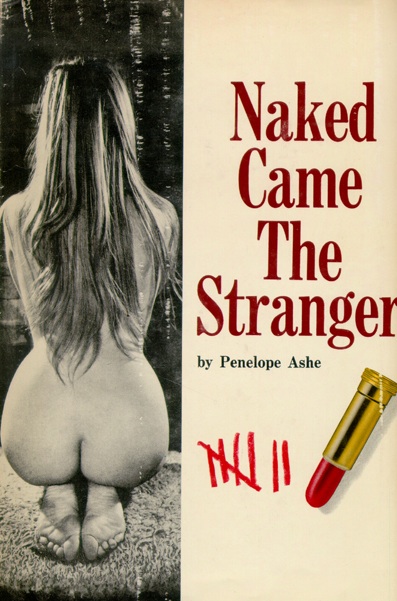
Naked Came the Stranger

At some point during discussions of the viability or validity of independent publishing someone critical of the concept is bound to opine that traditional publishing houses act as quality filters, ensuring that only books worth reading get published. Which will usually cause someone on the other side of the fence to bring up Nicole "Snookie" Polizzi's "A Shore Thing." Fact is, you don't have to cite extreme market miscalculations like that one. The old Barnes & Noble in Wilmington was a few blocks from UNCW and had a café friendly to writers and college students, complete with wooden tables for four and a long counter with stools across the front where I did much of my early writing. (The new, trendier B&N is nearer the beach and its café features little round tables fit for two coffee cups and a biscotti; no counter.) One of the pleasures of writing there was that at any time I felt overwhelmed or discouraged, I could stroll through the racks and find a dozen books worse than anything I'd written published by major houses.

However, as bad as some traditionally published books are, in every case they represent a storyteller's sincere effort to master the craft and an editor's belief in the quality of that effort. (Or, in Polizzi's case, the belief that a tell-all book disguised as a novel by a TV reality show personality would be of interest to someone, anyone.) You might take it as a given that no one ever set out to write a bad book. And you would be wrong.

Back in the late 1960s the bestseller lists in the USofA were dominated by works by writers like Harold Robbins, Jackie Collins, and Jacqueline Susann. Vapid novels about morally bankrupt people who would make the characters of Gossip Girl look like philosophical giants exploiting everyone around them, having sex at the drop of an innuendo, drinking and drugging to ridiculous degrees, and either coming to a bad end or finding eternal happiness as a result. This was the era of "Valley of the Dolls" and "Portnoy's Complaint." By the standards of today's more erotic romances, the sex was pretty tame, but it was shocking stuff forty-five years ago.

A newspaper columnist named Mike McGrady became so fed up with (or so alarmed by, depending on the source) the "sex sells" mentality he saw driving American culture that he decided to do something about it. He put together a team of twenty-four fellow journalists for the sole purpose of producing a horrifically bad novel with lots of sex and trying to sell it. The basic premise for "Naked Came the Stranger" was a husband and wife who are NYC celebrities with a morning radio talk show. The wife (Gilly) discovers her husband (Billy) has been cheating on her and decides to even the score by having sex with as many married men in their upscale Long Island community as possible. Her goal is to corrupt and seduce every archetype of civic and moral leadership she can find. Rules for writing were purple prose throughout (example: Gilly's breasts are "pendulums of passion swinging in the winds of lust") and two sex scenes in every chapter, with the sex act itself depicted mechanically but with awkward euphemisms for the clinical details. None of the writers knew anything about what the others wrote and McGrady required rewrites if he detected any literary merit whatsoever. Gilly's appearance and body type change with every chapter, though she is consistently beautiful. (There's a scene wherein the sight of her naked breasts causes a homosexual man to become heterosexual.)

In 1968 a relative of McGrady's posed as new author Penelope Ashe marketing "Naked Came the Stranger" as her first novel. The book sold to the first major house she
approached and was published in 1969, becoming an instant bestseller (the picture of the naked woman on the cover probably helped). Book reviewers in major markets, including Stern, Le Monde, and the New York Times, used phrases like "sizzling" and "thought-provoking" and compared the ersatz Penelope Ashe to John Updike and Philip Roth. She appeared on talk shows, was interviewed about sexual liberation in women's magazines, and advised aspiring writers to impale themselves on their typewriters. After a few months the authors appeared en mass on the David Frost Show, explaining their reasons for the hoax and expressing some embarrassment that their intended pillory of "sex sells" novels was now outselling its competition. The revelation of the hoax actually triggered a jump in sales fueled by widespread speculation the novel was in fact a roman-a-clef and that the adulterous men in the Long Island community were nationally known public figures.

Naked Came the Stranger is more fun to read about than it is to read. In fact, reading it is a chore. Not only are the mores of the period awkward by today's standards, the book itself is deliberately and methodically awful. Oh, there are moments. Like when Gilly asks a pornographer where he gets all his kinky ideas and he replies: "Like every other writer, I draw from the human condition." But on the whole, McGrady did a thorough job of eradicating anything of value from the manuscript.

Naked Came the Stranger was a bestseller not because of its excellence, but because people will read what they want to read despite what any arbiters of literary taste say or gatekeepers of excellence do. And "gatekeepers" includes the band of hoaxers who were sounding the alarm about the degeneration of American literature. The trend they were protesting matured, outgrew its "look what we can get away with" stage, and diversified into the spectrum of spicy, sensuous, and erotic romance novels that today makes up the lion's (lioness's?) share of the world fiction market. All of which says a lot about the role of traditional publishers, and the potential future of independents.

(More about Naked Came the Stranger in Museum of Hoaxes and Wikipedia)

Friday, December 16, 2011

NaNoWriMo: It's Not You; It's Me.

Okay, show of hands: How many people here participated in the annual “National Novel Writing Month (NaNoWriMo)” during November? If so, how’d you do? If you met or exceeded the goal of the exercise, then I applaud you. What you accomplished in those thirty days is nothing short of amazing. Even if you signed up with the best of intentions and fell short, give yourself a pat on the back. It's hard enough just sitting down to write in the first place, let alone trying to do it while staring down that kind of pressure.

Me? I didn’t participate this year, though I came closer to going for it than I did in 2010. Back then, I was still smarting about the previous year. Why? Because in 2009, the first year I decided to try my hand at what definitely is quite the challenge presented by NaNoWriMo, I failed.

Spectacularly.

My intentions were pure. In late October 2009, as I was gearing up to start writing the novel which would be due to my editor in February 2010, I decided that I was perfectly positioned to take my own shot at this “NaNoWriMo thing” I’d been hearing others talk about during prior years. 50,000 words in a month? That would be half of my projected word count for the book, putting me well ahead of the schedule I’d already outlined for myself between November 1st and the novel’s actual due date. The first day of the month arrived and somebody somewhere fired the NaNoWriMo gun, and we were off. My output for Day 1 was something shy of 1,300 words, just under the per-day pace to which one might aspire if intending to pursue the month’s goal. I could make up the difference with little or no problem, I told myself.

And then? Well, I could offer all sorts of excuses, maybe trot out a story about how real life got in the way (it did), or my day job (that, too), or how other writing assignments—each with their own crunch deadlines—showed up. They did, and I met those deadlines, but what about my personal goal of knocking out half of my novel in a month?

Um, not so much. By the end of the month, and while I actually stayed more or less on pace with meeting my actual, contracted February deadline, I was well short of meeting the NaNoWriMo goal. What the heck happened?

The simple answer? I suck at self-imposed deadlines.

My day job is ruled by deadlines; immovable milestones which cannot be missed regardless of when those particular days of the month fall on the calendar. Failure to hit those marks carries with it the prospect of financial penalties as well as damaging our standing with our clients. Weekends, holidays, illness and/or vacation don’t matter; the dates are the dates, and that’s just the way it is. With kids, you’re always on some kind of schedule, be it school, Taekwondo, gymnastics, play dates, and so on. So far as my commissioned writing is concerned, I take those deadlines and due dates very seriously. I loathe the very idea of being late, and my friend and co-writer, Kevin Dilmore, will tell you that my level of focus and crankiness increases as a deadline looms.

On the other hand, when it comes to writing just for me, I tend not to set any sort of real deadline. Instead, I just write and see where the words take me. I guess you can say it’s my way of scratching the writing itch while at the same time taking a break and decompressing from the “job aspect” of the process. It’s also one of the few opportunities I have to give the calendar, my schedule, and everything else the Big Finger. After so many years spent figuring out how to balance my professional writing with my day job, family, and other responsibilities and demands on my time, I think it’s just second-nature for me to do things this way. In the back of my brain, I know that no matter how I dress it up, a self-imposed writing deadline carries no penalty.

That said, I’m stubborn, and part of me keeps telling myself, “Shut up and try again, bonehead.” It’s obviously too late for 2011, but what about NaNoWriMo 2012? If I’m going to sign up for the program next year, I’m going to need some kind of accountability plan; something public so that I can equate it in all the ways that matter to a contracted deadline. Yeah, that just might be the ticket.

So, anybody else struggle with deadlines, be they external or self-imposed? What methods or tricks do you employ to keep yourself focused?

Thursday, December 15, 2011

Guest author Chicki Brown: A Brave New World

Contemporary women’s fiction/romance author Chicki Brown has published four Kindle best selling novels. An avid reader, her favorite authors are Beverly Jenkins, Eric Jerome Dickey, Lisa Kleypas, J.R. Ward and Suzanne Brockmann. A New Jersey native, Brown and her family relocated to suburban Atlanta, Georgia in 1994, and she now proudly calls herself a “Georgia peach.” Her many homes in cyberspace include her website, personal blog, Twitter, and Facebook.


A Brave New World

I’m certain this title has been overused when talking about electronic publishing, but it is most appropriate. June 2012 will mark my second anniversary as an e-author. In this short time, I have learned enough about the industry to fill volumes, and the learning process continues daily. The publishing industry is morphing into an organism that’s never before existed, and this is a good thing for authors. We are now in the driver’s seat. It’s not such a good thing for those who are rushing to throw something into cyberspace just to jump on the bandwagon.

My concern is with what I see happening in the industry lately. Many first-time authors are spitting their books out onto Kindle and Nook hoping to cash in on the explosion in electronic publishing. Unfortunately, in their zeal, many of these newbies have skipped several essential steps in the process of becoming a successful e-book author.

During my daily Internet travel, I end up talking to new and aspiring authors. It is becoming clear to me a great many of them are under the misconception that e-publishing is the “quick and easy” road to publication. They haven’t done their homework on the details of what it takes to get a properly formatted manuscript onto Kindle, Nook and the other electronic readers. Some of them even assume those e-tailers will do the formatting, revision and even marketing for them. Wrong!

I know I’m from a different generation, but I believe expecting instant anything other than rice or oatmeal is a joke. Publishing, whether traditional or electronic, involves a LOT of hard work, long hours, tedious revisions and repetitive tasks. Certainly, an author can farm these duties out to someone else, but unless the aspiring author is a celebrity or independently wealthy, they can’t afford to do so. This means the responsibility is on the creator of the work.

Before I started writing, I had always been an avid reader, only I had no idea how my favorite authors created the stories I loved. Writing my first books was a blast, but the plot was convoluted, it was filled with headhopping and tons of backstory. All I did was put the story on paper that was in my head. It will never be published, because every time I go back and look at it, I cringe.

In the past eighteen months, I have released four novels, but what some of the newbies don’t understand is that those novels were written over a period of ten years. During those years, I devoured writing craft web sites, joined my local Romance Writers of America chapter meetings, learned about plot, point of view, characterization, backstory, foreshadowing – all the stuff I didn’t know about when I wrote the first manuscript. Yet I don’t regret doing the process backwards. It taught me how much I had yet to learn about the craft of writing.

Another major misconception I’ve heard is the idea that once your book is published, the marketing aspect can be taken care of by a few posts to your Facebook page and handing out a couple of hundred flyers. Wrong again. Most e-book authors spend several hours every single day marketing and promoting their books. It is essential to learn to navigate the social networks in a professional manner and observe the expected etiquette. This doesn’t mean you still can’t have fun online, but being known as “SuziethebigbootyAuthor” is no longer acceptable if you want to be taken seriously. Posting about how drunk you got at last night’s party gives readers and potential readers a negative impression you do not want as a published author.

Make it a daily habit of reading the top e-publishing blogs like:

http://jakonrath.blogspot.com/
http://thewritersguidetoepublishing.com/
http://www.selfpublishingreview.com/
http://www.publetariat.com/
http://www.huffingtonpost.com/books/

My advice to new and aspiring authors is to put in the time it takes to become knowledgeable, so you don’t go out there looking crazy. Invest in preparing yourself for the journey. It will be well worth the effort.


Chicki’s new release, Ain’t Nothing Like The Real Thing, debuts on January 2, 2012 on Kindle and Nook. 

All of Chicki's books can be found at Amazon and Nook. 


Tuesday, December 13, 2011

Writing and Reading Christmas Fiction


As a writer, I love this time of year when the spirit of Christmas is in the air and the snowflakes are falling and gift of giving is in full swing.

I have been fortunate enough to embody this in a number of Christmas-themed novels, including CHRISTMAS DIAMONDS, CHRISTMAS HEAT, and my two latest ones, CHRISTMAS WISHES: Laura's Story and PRIVATE LUAU. It has been fun to use the season and its many wonderful dynamics to my advantage in carving out tales of good tidings and joy that so many people can relate to.

As Christmas 2011has nearly come and gone, I am already looking ahead to Christmas 2012 and beyond to see what new and magical tales I can conjure up that says, "Have Yourself a Merry Christmas."

But perhaps even more satisfying to me than writing Christmastime fiction is reading it by other writers. Some classics immediately come to mind.

Obviously, A CHRISTMAS CAROL by Charles Dickens tops most lists. THE CHRISTMAS BOX by Richard Paul Evans is a must for as inspirational fiction. MRS. MIRACLE by Debbie Macomber was a delight, as was THE CHRISTMAS SHOES by Donna VanLiere. More recently, I enjoyed James Patterson's THE CHRISTMAS WEDDING.

It is definitely the most wonderful time of the year and I plan to take in at least one Christmas novel as I curl up on couch in front of fireplace and sip hot chocolate with the Christmas tree decorated and presents snuggled beneath.

What are your favorite Christmastime novels? Or nonfiction?

Happy Holidays to all!