Showing posts with label business of writing. Show all posts

Saturday, June 22, 2019

The definition of success

Novel Spaces is celebrating its 10th anniversary! We hope you've enjoyed the popular posts from our archives which we've shared with you over the past months. This one was first published on October 25, 2012. Enjoy! 


By Jewel Amethyst


While watching the local newscast, I heard a reporter introduce a prominent doctor as a successful surgeon, before proceeding to recite a long list of his achievements.  I turned to my husband and asked sarcastically, “So if another surgeon doesn’t accomplish all that he has, does that make him an unsuccessful surgeon?” 

My husband shrugged nonchalantly and responded, “I guess it depends on how you define success.”

I smiled.

When I first decided to publish my stories, my idea of success was getting a traditional publisher to publish my story.  At that time, I was not thinking about self-publishing and (now shamefacedly) like many authors a few years back, I didn’t think of self-publishing as being successful.  But now that I have gotten my work published, and spent three years without another in print, my idea of success has changed.

What makes a successful author?  Is a successful author a prolific author?  I can think of one Pulitzer Prize winning author who only published one book.  Harper Lee is by any measure a successful author.  Not only did she win the Pulitzer Prize in 1961, but her book, “To Kill a Mockingbird”, is considered an American classic and is assigned reading for English Literature in most middle and/or high school classes.  Yet Harper Lee is not prolific.

Is a successful author a rich author?  Well in that case the successful authors are few and far between.

Is a successful author on the NY Times bestseller list?  That is one measure of success.  But does that mean any author who is not on the NY Times bestseller list is unsuccessful?

Is a successful author published by a traditional big publishing house?  I’ve seen many successful authors who have self-published, even some producing bestsellers.  I’ve seen huge publishing houses publish books that tank.

What I’ve concluded is that what defines a successful author is dependent on the definition of success.  And that definition is not only subjective, but is also dynamic.  The definition of success as a writer is constantly changing for me.


Saturday, June 1, 2019

You're In It For The Money

Novel Spaces is in its 10th year! Over the coming weeks we'll be featuring some of the most popular posts from our archives. This one was first published April 13, 2014.


By Sunny Frazier

Oh yes, you are! And that's nothing to be ashamed of even if it sounds crass to admit your intentions aloud.

I've been blacklisted on at least one artsy site and bad-mouthed on others for blatantly saying "I like to make money from my writing." I blame my attitude on my early years as a journalist. In those days I was paid to put words on paper and I grew to like having an income. It felt good to have people reading my articles, even when my precious words were tossed in the recycle bin after a day. Now there are few newspapers and my degree languishes, but I still like the notion that my words are worth a few dollars.

Kudos to those who write simply for the sake of their art. Perhaps satisfaction comes from pieces published in literary magazines for limited readership. Me--I want lots of people reading my stories and books. I want those hours (years) I put into my work to be rewarded. This is a business for me and the IRS concurs.

Not that it's ALL about money. I have no problem contributing to Novel Spaces because I'm investing in a site I respect and hope readers will possibly invest in me. I give books away when I'm on panels to pepper the pot for sales. I've donated my novels to the local Senior Center and VA Hospital. I've even gifted to people who were too broke to spend $12 on one of my books.

Does expecting money for my work make me a hack? Possibly. I know what readers want and I strive to give it to them. They want an entertaining story, interesting characters, a few cringe-worthy moments (I write mysteries) and a satisfactory ending. But, to keep my standards high, I also give them craft, personal insights, soul-searching questions and a bit of astrology. Yes, it's worth much more than the few dollars I'm asking in return.    

What I'm against are those people who make money off of the one segment that can't afford the cash--new authors. When starting out, it's hard to resist the carnival barkers promising quick routes to the bestseller list. They come in the form of costly conferences, webinars, PR people, paid reviewers and businesses that impersonally shovel titles to the Internet. All of this can be done for free--and should be. The info is readily available in your computer if you know where to look. Since we're close to Easter, I'll liken the process to hunting for those colored eggs. The search will take exploring websites, following leads and a bit of time.

Time is money. I realize that and I also understand the World Wide Web can be a very confusing place. My solution was to start a Posse. Several years ago I decided to share my own searches with others. Authors just send me their email addys and they're in. They get emails from me pointing them to articles on marketing, platform building, inside business info, places looking for guest bloggers and yes, my blogs.

There's no charge because the effort is minimal on my part. It's my way of paying it forward. Consider it a gift from one author to another. I hope others do the same with their future network. And, who knows? Perhaps I'm make a fan or a friend who will buy one of my Christy Bristol Astrology Mysteries. Because, as the L'oreal ads say, I'm worth it!  


Monday, April 15, 2019

Hurry Up and Wait

Novel Spaces is in its 10th year! Over the coming months we'll be featuring some of the most popular posts from our archives. This one was first published February 9, 2010.


By Liane Spicer

This writing business is hell sometimes. No, not the writing writing, but the waiting that never ends. We wait for agents to get back to us. Agent in the bag, we wait for editors to get back to them. Then we wait for the agent to get back to us with the editors' verdicts.

We wait for the sale. For the galleys. For the advance check. For the release. For reviews, royalty statements, sales stats... It all adds up to years of waiting. During this time we obsess. We wonder if the agent/editor ever received the script, and are convinced that if they did they're using it as a footstool to reach the toner on the high shelf of the office supplies cabinet. No matter what stage of the business you're at, it seems, the waiting just never, ever ends. I've read of writers going through this same waiting, wondering and despairing hell with their thirteenth book.

What's a writer to do? Apart from going crazy checking the inbox 40 times a day, and the Amazon stats 60, that is? Here is a by no means exhaustive list of the things I do in my waiting time:

Twiddle thumbs.
Read blogs.
Compare search rankings for novel #1.
Fiddle with widgets.
Shop online catalogs.
Work, albeit distractedly, at the day job.
Fantasize about the perfect writing life - the one where writing pays the bills.
Create wish lists for every category of consumer item.
Drink wine.
Engage in text message flirty war of words with favorite ex.
Eat chocolate.
Eat almond crunch cookies.
Just eat.
Apply to MFA writing program I swore I'd never start.
Sink hours on social media sites. (Don't look at me like that - at least I don't tweet!)
Paint the bedroom.
Paint the living room.
Paint my nails.
Stare into space.
Wonder, often, whether writing for publication is a form of insanity.

Yes, I'm a neophyte. But what do the real writers advise? They tell you to write, that writing keeps your mind off the waiting. I'm ready to begin listening. Today, for the first time in many moons, I completed almost 2,000 words of a brand new novel in one sitting. It felt good to watch the demons crawl off and lick their wounds for a few hours.

The pros are right. Getting deeply involved in a new world and new characters is the only answer.

So, how do you manage the waiting game? Come on, let's have it, the good and the bad.


Friday, March 1, 2019

How to Not to Anecdote

Novel Spaces is in its 10th year! Over the coming months we'll be featuring some of the most popular posts from our archives. This one was first published February 7, 2015.


By Che Gilson


Saturday, December 22, 2018

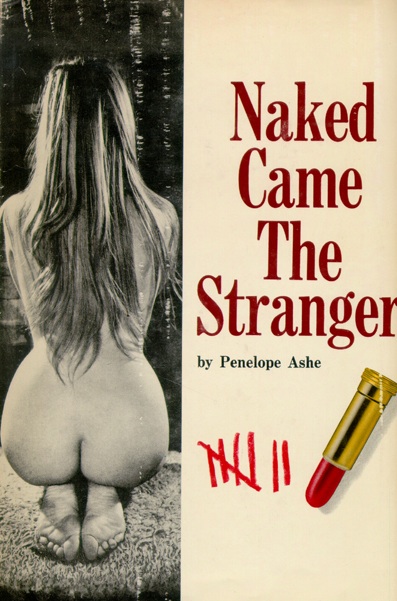
Naked Came the Stranger

Novel Spaces is in its 10th year! Over the coming months we'll be featuring some of the most popular posts from our archives. This one was first published December 18, 2011. 


By Kevin Killiany

At some point during discussions of the viability or validity of independent publishing someone critical of the concept is bound to opine that traditional publishing houses act as quality filters, ensuring that only books worth reading get published. Which will usually cause someone on the other side of the fence to bring up Nicole "Snookie" Polizzi's "A Shore Thing." Fact is, you don't have to cite extreme market miscalculations like that one. The old Barnes & Noble in Wilmington was a few blocks from UNCW and had a café friendly to writers and college students, complete with wooden tables for four and a long counter with stools across the front where I did much of my early writing. (The new, trendier B&N is nearer the beach and its café features little round tables fit for two coffee cups and a biscotti; no counter.) One of the pleasures of writing there was that at any time I felt overwhelmed or discouraged, I could stroll through the racks and find a dozen books worse than anything I'd written published by major houses.

However, as bad as some traditionally published books are, in every case they represent a storyteller's sincere effort to master the craft and an editor's belief in the quality of that effort. (Or, in Polizzi's case, the belief that a tell-all book disguised as a novel by a TV reality show personality would be of interest to someone, anyone.) You might take it as a given that no one ever set out to write a bad book. And you would be wrong.

Back in the late 1960s the bestseller lists in the USofA were dominated by works by writers like Harold Robbins, Jackie Collins, and Jacqueline Susann. Vapid novels about morally bankrupt people who would make the characters of Gossip Girl look like philosophical giants exploiting everyone around them, having sex at the drop of an innuendo, drinking and drugging to ridiculous degrees, and either coming to a bad end or finding eternal happiness as a result. This was the era of "Valley of the Dolls" and "Portnoy's Complaint." By the standards of today's more erotic romances, the sex was pretty tame, but it was shocking stuff forty-five years ago.

A newspaper columnist named Mike McGrady became so fed up with (or so alarmed by, depending on the source) the "sex sells" mentality he saw driving American culture that he decided to do something about it. He put together a team of twenty-four fellow journalists for the sole purpose of producing a horrifically bad novel with lots of sex and trying to sell it. The basic premise for "Naked Came the Stranger" was a husband and wife who are NYC celebrities with a morning radio talk show. The wife (Gilly) discovers her husband (Billy) has been cheating on her and decides to even the score by having sex with as many married men in their upscale Long Island community as possible. Her goal is to corrupt and seduce every archetype of civic and moral leadership she can find. Rules for writing were purple prose throughout (example: Gilly's breasts are "pendulums of passion swinging in the winds of lust") and two sex scenes in every chapter, with the sex act itself depicted mechanically but with awkward euphemisms for the clinical details. None of the writers knew anything about what the others wrote and McGrady required rewrites if he detected any literary merit whatsoever. Gilly's appearance and body type change with every chapter, though she is consistently beautiful. (There's a scene wherein the sight of her naked breasts causes a homosexual man to become heterosexual.)

In 1968 a relative of McGrady's posed as new author Penelope Ashe marketing "Naked Came the Stranger" as her first novel. The book sold to the first major house she
approached and was published in 1969, becoming an instant bestseller (the picture of the naked woman on the cover probably helped). Book reviewers in major markets, including Stern, Le Monde, and the New York Times, used phrases like "sizzling" and "thought-provoking" and compared the ersatz Penelope Ashe to John Updike and Philip Roth. She appeared on talk shows, was interviewed about sexual liberation in women's magazines, and advised aspiring writers to impale themselves on their typewriters. After a few months the authors appeared en mass on the David Frost Show, explaining their reasons for the hoax and expressing some embarrassment that their intended pillory of "sex sells" novels was now outselling its competition. The revelation of the hoax actually triggered a jump in sales fueled by widespread speculation the novel was in fact a roman-a-clef and that the adulterous men in the Long Island community were nationally known public figures.

Naked Came the Stranger is more fun to read about than it is to read. In fact, reading it is a chore. Not only are the mores of the period awkward by today's standards, the book itself is deliberately and methodically awful. Oh, there are moments. Like when Gilly asks a pornographer where he gets all his kinky ideas and he replies: "Like every other writer, I draw from the human condition." But on the whole, McGrady did a thorough job of eradicating anything of value from the manuscript.

Naked Came the Stranger was a bestseller not because of its excellence, but because people will read what they want to read despite what any arbiters of literary taste say or gatekeepers of excellence do. And "gatekeepers" includes the band of hoaxers who were sounding the alarm about the degeneration of American literature. The trend they were protesting matured, outgrew its "look what we can get away with" stage, and diversified into the spectrum of spicy, sensuous, and erotic romance novels that today makes up the lion's (lioness's?) share of the world fiction market. All of which says a lot about the role of traditional publishers, and the potential future of independents.

(More about Naked Came the Stranger in Museum of Hoaxes and Wikipedia)


Thursday, November 2, 2017

Writing in Multiple Genres


I began my publishing career with a contemporary romance novel. This choice of genre was quite deliberate: it had nothing to do with the huge market for these books, and everything to do with the launch of Kensington's Arabesque imprint in the 1990s. Kensington was the first major publishing house to feature a line devoted to love stories about people of color, the absence of which had often been lamented by my friends and colleagues.

My publishing contract at the time included an option for a second romance novel, so I wrote one. It got caught in the meltdown of the publishing house, and I eventually recovered the rights and published it myself. Since then I have gone on to publish in several genres, using different names to keep things nice and orderly. I use my given name for literary work, and different pen names for historical fiction and interracial romance. I have a mystery series in the oven and I plan to use a variation of the Liane Spicer brand for those.

It can get a trifle confusing at times, I admit. In addition, I have a science fiction novella that I'm considering turning into a series, a completed memoir, and two works of nonfiction. Which names should I use for these? Should I come up with a new one for the SF series to eliminate the risk of confusing (and losing) my readers in a particular genre?

The bestselling author Judy Blume uses just one name for her juvenile, YA and decidedly adult titles. Others such as JK Rowling and Sue Grafton use different names for different genres.

My question is: How do you handle the multi-genre issue? Do you stick to one genre? And if you write in multiple genres, how do you handle the name challenge?

Wednesday, August 2, 2017

Book Sales: The Trump Effect


Yesterday I read an article that left me thinking about politics and book sales. In "Is Trump Ruining Book Sales?" the author, Morgan Jerkins, makes several observations about what I'll call the Trump Effect. One author cited claims that any books that aren't political and/or dystopian aren't really selling "in a world where reality has become stranger than fiction." Politics has become mass entertainment that's so compelling mere books have a hard time competing.

The US political spectacle has affected me both a reader and a writer--and I'm neither American nor resident in the US. Since the nonstop circus began, I have had to force myself to pick up a novel every now and then when the anxiety about my non-reading hits hard. I've always been a voracious reader but now I spend my reading time on online articles. When I do pick up a book it's usually nonfiction. I'm trying to avoid political articles but the lure is strong. However--and this is where things get really interesting--I'm finding that my book sales are better than ever before. I've gotten a royalty check every month since January 2016, and since January 2017 those royalties have been substantial enough to make a difference to my budget. It seems escapist genres, at least, are doing quite well despite the overall decline in sales.

Apart from the verifiable claim that overall book sales are in decline, the article is short on hard data, so I'll do an informal survey here. Has the ongoing political saga made a difference to your reading habits? And if you're a writer, have you noticed any difference in your sales? Enquiring minds want to know.

Sunday, July 2, 2017

Happy blogiversary, Novel Spaces!


When this blog went live on July 1, 2009 we never guessed that we'd still be here in 2017, starting our 9th year! Today we're looking back at the beginning, the journey, and how we managed this feat. We've seen many blogs, individual and group, fall by the wayside over the years, yet here we are almost a decade later. We must be doing something right.

Some time in early 2009 three debut authors with Dorchester Publishing's African-American romance line--Stefanie Worth, Phyllis Bourne and I, Liane Spicer--decided to start a group blog. It was Stefanie who first suggested it, but we discovered that both Phyllis and I had been thinking along the same lines. At first we intended to restrict members to authors of romance, multicultural romance specifically, so we found Dorchester's other AA romance writers, Farrah Rochon and Jewel Amethyst, and invited them aboard.

That's when we hit the first hurdle: we wanted some of our author friends to come along for the ride, but many of them did not write romance. We asked them anyway and to our delight, they came on board. Kevin Killiany wrote sci-fi; Marissa Monteilh wrote mainstream and erotica; Terrence Taylor wrote horror; Kaz Augustin wrote SFF and romance; Shauna Roberts wrote SFF and historical fiction... We were a motley crew, from places as widely strewn as the Caribbean, the US, Malaysia and the UK, with diverse backgrounds. So how did we make this venture work? It was actually quite simple: we all shared a passion for writing stories and we focused on the business of writing, on writing craft, and on our lives as writers.

At least half of the original members have gone. Over the years we have had 31 members, each contributing a different and valuable perspective on this business that we love. Our newest member is Mollie Blake, a mystery writer from the UK who joins us this month. We're a democratic, drama-free, mutually respectful group, and our dozens of guest authors, agents, editors and publicists have all honored the ethos of the Novel Spaces blog.

How long will Novel Spaces be around? No one knows. Every year we take a vote and so far there have been no 'nays' when we ask if the blog should continue for another year.

Here's to our 9th! Thank you to all our members, founding, past, and present. And thank you too to our guests and loyal readers without whom we would have no reason to exist. All the very best to the Novel Spaces family as we take another whirl around the sun.

Tuesday, April 25, 2017

Writing a Cozy Mystery


What, no detailed violence or bloodshed in my mystery—in this day of Mission Impossible XIV (or whatever number they’re up to) and CSI morgues in living color? And what about including a hint of romance rather than steamy, explicit sex scenes? Would anyone read it? Shades of Gray was made into a movie, for heaven’s sake.
I started writing my first mystery at a workshop. It was love at first write. Mysteries have always been one of my favorite genres. Agatha Christie, Lilian Jackson Braun, Nancy Pickard, Nora Roberts, John Grisham, Diane Mott Davidson, Carl Hiaasen, Tony Hillerman, and on and on. That there are sub-genres within the mystery genre didn’t give me pause. Until—people started telling me I needed to include sex scenes and gory details of the murders in my stories to appeal to today’s readers.
I struggled to include some gratuitous sex and violence in my otherwise strategy and clue-driven first mystery. It sounded unnecessary and even distracting. It was then I dug deeper into the varieties of mysteries. A revelation—I could write a cozy mystery, or a cozy. I looked back at my bookshelf. Sure enough, the definition of a cozy fit my most beloved mysteries.
Besides being G or PG rated, cozies often have an amateur sleuth, like Beth Stockwell, the protagonist in my Psycho Cat and the Landlady Mystery series. Details about the sleuth’s profession or hobby become part of the story (newspaper reporter, baker, librarian, house builder, knitter, bookstore owner, etc.) Beth is a landlady with rental properties that become crime scenes. A cozy mystery takes place in an intimate village, town, or neighborhood that is visited throughout each story in a series. Readers learn to know the town as well as the characters. My stories take place in Brookside, a quaint neighborhood of Kansas City, Missouri.
The converted Trolley Track Trail meanders through Brookside. The hiking/biking trail serves as a symbolic path Beth takes between her everyday home life and her dangerous investigating. Beth argues with herself internally while taking her daily walk, and she encounters different folks on the trail, both good and evil.
Pets. I can’t imagine Clive Cussler’s hero, Dirk Pitt, spending time with a cat. By no means all, but many, cozy mysteries include a cat or a dog as a character. The pets provide humorous interludes, willing listeners, and avenues for foreshadowing clues or danger to come. Sylvester, the Psycho Cat in my series, makes brief, but important, appearances in each book. Although he’s typical cat at all times, he is the catalyst for discovering the mysteries and some of the clues.
The structure of a cozy is essentially the same as any mystery—three acts with plot points, climax, and wrap-up. The challenge faced by the cozy writer, in my opinion, consists of creating characters, plot, and climax that are intriguing and exciting for today’s readers without depicting grisly murders and titillating sexual encounters in detail. That’s okay by me. I love my mysteries to be mysterious and suspenseful, not clinical.

Friday, November 4, 2016

The eBook vs. the Print Book Price War

Have you noticed that the price margin between print books and ebooks is narrowing? Not long ago, a reader would have the choice of either purchasing a $14.99 trade version of a book, or pay $4.99 for the ebook version of the very same title. What that did for ebooks was great, but what it did for print books meant they were second choice more often than not, because when it came down to clicking "Buy Now," readers saw the price difference as a no brainier, and they'd buy the electronic version, which told publishers that unless the reader just had to have the print version, the ebook version was good enough.

But, publishers realized that enough was enough when print books were not moving, and more and more books remained boxed up, waiting to be sold, standing in line behind their electronic counterparts. Print-on-demand helped out, but still, the production cost of printing a book remained significantly higher, and publishers realized they couldn't cut print prices because the profit margin was too narrow as it was. 

And so, the answer has been to simply raise the price of the ebook, and narrow the gap so that readers would see a choice between a $14.99 print version, and an $11.99 ebook version, and hopefully decide that the print version was well worth $3.00 more. 

So ebooks are going up in price, and I see that as a good thing for publishers and authors, yet perhaps not so good for readers in some cases. Some have a limit on how much they'll pay for an ebook, and are very firm in not going beyond that, but if it's a book they really want, they will. We (publishers and authors) are subtly encouraging readers to think twice before making that final decision as to which version to buy, and go beyond their preference as far as format. The book format price playing-field has been strategically planned to level out. And, I think it's working! 

So don't be afraid to charge a little more for your ebook. Just don't tell your readers that I told you, lol! 

Write on!! 

Friday, September 30, 2016

Writing for Pleasure

Years ago when I worked full time, I couldn’t wait to get home, curl myself up with my laptop and write.  Yes, write. It was a hobby. I wrote for pleasure. And with it came the starry eyed dream of being a published author. I daydreamed about listening to people talk about the wonderful book that they’d just read, not realizing that they were talking to the author of that book. It was an exciting time.

And then I published.

Lots of things came with publishing. Things that authors dread like promotion and marketing and all the anxiety associated with publishing. I began to work part-time and write more. It became a small business. I was juggling all the aspects of writing, publishing, marketing and promoting. That left less time for writing. Then I had to make the conscious effort to write. So, per the suggestion of many seasoned writers, I became disciplined and dedicated blocks of time to write as if I was going to work.

Then the most horrible thing happened: writing became a job. It became a chore and I no longer enjoyed it like I did when I first started. How did it come to this?

Fast forward to the present. I am working full time again. I’m juggling all my kids’ extracurricular activities. It’s demanding. I haven’t had time to breathe much less write. But guess what? I am now missing writing. Now I can’t wait to curl up with my laptop and write, no matter how little time I have for it.

There is a difference between writing for business and writing for pleasure. It’s just so much better writing for pleasure.

Saturday, September 17, 2016

Keeping Your Author Profile and Posts Picture Current


by Linda Thorne

My company asked me to provide a picture and a profile page recently for something our company is publishing for employees nationwide. For some reason they needed it that morning, so I had authorization and approval to find someone to take it for me.

The first thing that came into my mind was: Yay. I now have a great excuse to impose upon someone to take photos of me when I'm in dire need of updated ones for my author posts. The outcome is the pic of me above.

Pictures are important for authors. You'll need them for your website, your swag, Facebook, Twitter, and blog posts. Most people will remember pictures before they remember names. To help get your name out there include your picture with it, often. People will begin to recognize you. But your picture needs to look like you. Whether you think you're too thin, too fat, too wrinkly, you will always look the way you do.

I used Tucker Photography here in Nashville in November 2014 and bought photos to use on Facebook for my website, and a number of posts coming out in preparation of Just Another Termination's August 2015 release. That took time and money, but I've gotten a lot of mileage out of those pix. The problem is they are getting close to two years old, so I've started adding more current pictures and will eventually let the older ones go.

At a writers conference I attended, I Googled some of the authors I'd met. I had a problem finding one online. Why? Because the person's picture was so outdated, I thought this had to be another author with the same name. Finally, after getting the names of some of the books this author had published, I was able to confirm that the person's picture online was that of the author I met. I could not find any resemblance.  

I know an author who uses initials for the first name and doesn't post personal pictures. Instead, she posts something more like a logo with her face hidden behind. I think it adds mystic to her branding and if that's what she wants her name to be identified with instead of her picture, that works too. Recently, she mentioned the advantage of not having to update her picture.

Time seems to pass quickly, at least to me it does. We all will change: Look older, fatter, skinnier, grayer, some may grow beards or shave beards, become bald. Keeping pictures updated may be a nuisance, but you are the biggest part of your branding, so let the real you be seen.


Friday, May 20, 2016

Kevin's Picks: Books on Writing

I’m glad this month’s topic was not “the best book on writing” because there is no such beast. No one can ever write about how to write because there’s no one way to write. All a writer can do is share the way they write. (Or “ways” – some of us approach different projects differently.) If naming one best book on writing is impossible, naming one favorite book on writing is next to impossible. No one else is me, therefore no one else is going to write a book about writing that contains everything I like and nothing I don’t. But there are many books that have things I like and have given me tools I use every day.

That use of “tools” is important. I view what I do as a craft, not as an art. Art is interesting, art can add grace notes to one’s life, but craft always has a greater impact. Which is more likely to be an integral part of your life, a Dali painting* or the absolutely perfect armchair for reading? I try to make every story that perfect chair. (*The question presupposes you cannot sell the Dali painting for millions of dollars.)

This blue collar craftsman’s attitude towards storytelling means there is a slew of writing books I decidedly do not like. Books that treat writing as though it were some mystical journey of self discovery, for example. I’ve been a crisis intervention counselor and mental health case manager for years; if your looking for a mystical journey I recommend Jung. (Actually, I don’t. Jung’s certainly mystical, but that’s about it. If you want your journey of self discovery to get anywhere I recommend cognitive behavioral therapy.) Nor do I have much patience with the notion writing is solely about following your heart. Unless you want to end up in a hot, dark, wet place getting shoved by your lungs every time you take a breath. That being said, you can exorcise (and exercise) a lot of demons through writing, but again that has more to do with therapy than writing. [And yes, before someone points it out, the energy of those internal demons can inform your writing; but as narrative impetus, not narrative element.]

Rather than produce a 3,000 word column analyzing what worked and what didn’t work for me from the myriad books on the market, I’m going to list the books I keep. Actually, I keep all my books. These are the books on writing I take down and reread occasionally – none is perfect, there are parts I don’t agree with in all of them, but on the whole worth your attention.
The ones that are in reach of my writing table, in the order my eye falls on them:

Lawrence Block. Telling Lies for Fun and Profit; Writing the Novel (1985 version, I know it’s been rewritten); Spider, Spin Me a Web. (There are more, I recommend everything he’s written on writing.) Gerald Weinberg. The Fieldstone Method. Cheryl Klein. Second Sight. (Writing children & YA fiction by an editor of the American editions of Harry Potter.)
Francine Prose. Reading Like a Writer (More about understanding storytelling than a nuts & bolts how to.)
Albert Zuckerman. Writing the Blockbuster Novel (The useful parts are reading the various iterations of Ken Follett's narrative outline of The Man from St. Petersberg as he refines and focuses the story.) David Maas. Writing the Breakout Novel On the fence with this one. The intent is writing a novel that will sell because it stands out from the crowd while fitting into the market. Useful parts are about finding your own, original take on popular story tropes.) Ron Carlson. Ron Carlson Writes a Story All about the process and craft of writing a story. I don’t do everything the way he does, but I like his attitude and reading about how he writes is enlightening. I cannot write or speak about my own journey of becoming a writer without mentioning Dean Wesley Smith and Kristine Kathryn Rusch. These two physically beat sense into me (okay, metaphorically physically) and turned me from a dreamer into a working, published writer. Their sites are full of useful information on writing and supporting yourself as a writer. Go spend time studying their sites.
Kristine Kathryn Rush Dean Wesley Smith

Tuesday, May 17, 2016

Hey! I’ve Got Favorite Writing Books, Too!

So, the theme this month here at Novel Spaces is “Our Favorite Writing Books.” We’re already halfway into the month and a lot of popular choices have already been mentioned, which means I can reiterate at least some of the selections from my fellow Novelnauts, try to buck the trend in some way with unconventional choices of my own, or perhaps be “That Guy” and eschew the whole exercise because of some half-baked reason that sounded pretty good in the shower this morning.

Nah. I hate being “That Guy.”

Therefore, I perused the shelves in my writing office and decided on four quite different books that each focus on a different area of writing.

First up is one that’s already been mentioned a few times, Stephen King’s On Writing. What could I possibly add to the accolades this book has already received? It’s a wonderful little volume, spare in language and direct on advice (most of which really boils down to, “Why are you reading this when you could be writing?”). The book offers a glimpse into the life and process, mind and even soul of one of the most celebrated authors of the past fifty years.

Speaking of King, another favorite book from my writing shelf isn’t really a “How to” book in the true sense, even though reading it did give me a new appreciation for storytelling. The Shawshank Redemption: The Shooting Script contains the original film screenplay along with notes and observations by writer/director Frank Darabont, who gives readers a tour into his process of adapting King’s original novella, Rita Hayworth and Shawshank Redemption, for the screen. It is a wonderful chronicle of taking a powerful story and making it into what is commonly regarded as one of the greatest films of the 20th century.

Next, I’m going to slide over to something closer to the particular flavor of writing where I make a good deal of my living: licensed tie-in work. For a collection of wisdom, tips, tricks, and cautionary tales, we have Tied In edited by Lee Goldberg and collecting nineteen articles and essays highlighting the history, craft, and business of this oft-misunderstood field of endeavor. This volume contains the fruits of hard-won experience from some of the biggest, most enduring names in the field, many of whom are multiple award winners for their original prose or television and film writing. Some of the people contributing essays to this collection are authors I was reading thirty years ago, and who inspired me to want to write in the first place.

Finally, I’m definitely going to pull out an oddball choice, which earns a spot here just for its title: The Elements of F*cking Style, by Chris Baker and Jacob Hansen. As explained by the authors in their introduction, their aim is put some fun into the learning of writing and grammar rules. Though presented as parody, the simple truth is that reading this delicious little time will make you take a long, hard look at the state of the written word, and give you a new appreciation for grammar and...yes...f*cking style as you write. Warning: Objectionable language and references litter this book. Proceed with caution.

I suppose I could just read the comments attached to this month’s previous articles and get a look at other people’s favorite writing books, but then I wouldn’t get to feel the same rush of attention and love from the audience that those other writers received. So, go on and repeat all of your choices and selections again down below. Thanks!

Wednesday, December 2, 2015

Creativity or Marketability?

Did I mention I have a harem of WIP?  It’s a growing Harem. Every couple of months I add a new bride when the idea bug bites me. I am infatuated with that new bride and spend countless hours with her until life takes my attention away. Sometimes, like any good husband, I go back to my old WIPs and spend some time with them.  That’s just what I did last week. In spite of adding two new brides in the past six months, I went back to my old bride from almost a decade ago. What a ride!

That old WIP was written before I published. It was actually my third manuscript. I wrote it while receiving the many rejections of my second book, A Marriage of Convenience. You see, I have a policy: if publishers reject one manuscript, just keep writing. My first manuscript had already been rejected into oblivion, when I wrote my second novel. This old WIP was my consolation for the second round of rejections. But somewhere after 110 pages of writing, A Marriage of Convenience got accepted by Dorchester Publishing. My attention now diverted to edits and rewrites and deadlines, and promotions, this third bride was abruptly abandoned. I revisited it briefly a few years back, but it didn’t fit into a genre mold: it had elements of romance, but it didn’t fit the formula of romance. It didn’t quite fit neatly into any category that was hot on the market at the time. Consequently I abandoned it once more and worked on other “publishable” work.

As I read that old WIP I was amazed at the flow of my writing. It was raw and unpolished, yet it gripped me so that I couldn’t put it down. Back then I didn’t worry about POV. It was written in a God-like omniscient narration where the storyteller knew everything that every character was thinking, feeling. It was not written for a particular audience. It was written because I had a story to tell and I wanted to tell it. It was also written in discrete bits that left it up to the readers’ imaginations to fill in the blanks. It had a unique voice, my voice, and I loved it.


I picked up another manuscript that I had written after publishing my first two books. The writing was different. This one didn’t hold my attention as much, but it was polished and written to a specific readership. It had all the things I had learned going through the rounds of editing for my first two published books. It was marketable. 


Why was my writing before publication different from my writing after publication? You guessed it: the emphasis had shifted from creativity to marketability. I was now writing what I think could be published rather than what came out of me naturally. I had transitioned from writing as a hobby, to writing as a profession. Some things get lost in that transition. One of those things is creativity and sometimes even your unique voice. It can become formulaic. 


So what’s more important in writing? Is it creativity or marketability? For those professionals who make a living by writing the answer is obvious. For the hobbyists creativity is more important. But for those of us who are transitioning from writing as a hobby to writing as a profession it is an agonizing question we wrestle with constantly. And if you think that you don’t have to choose, just be aware that for publishers, even indie publishers, the bottom line is the most important thing that determines whether a book is published.


So for all reading this post, I pose a question:  which is more important creativity or marketability? Why?

Sunday, November 22, 2015

Location, schmocation

In the real estate industry, there are three important watchwords: location, location, and location. Publishing, it appears, is not quite that geo-fixated. Let me illustrate. When most people think of the Caribbean, this is what they picture...

Maracas Beach, Trinidad, West Indies
...and this does in fact exist, many times over. This particular beach is a 45 minute drive from my home in Trinidad, at the butt end of the Caribbean. [see illustration of butt end below]


Map of Caribbean illustrating butt end, aka Trinidad
When I first got serious about writing for publication in the late 1990s, my location mattered a lot. The Internet existed but accessing it was a slow, tedious process that involved dial-up modems and, if one did not own a computer, long hours spent twiddling one's thumbs in Internet cafes waiting for a single web page to load one [minutes pass] thin [more minutes pass] line [maybe I should step outside and get some fresh air] at [sigh...they need to fix the AC in here] a time [damn and blarst..my half hour is up!].

So, I got info on publishers and literary agents from a friend who printed out a few pages for me now and then, and from magazines like Writers Digest which advised me to invest in a monstrous telephone book-like tome called Writers Market that was published every year and was out of date before it hit the shelves. I bought it anyway. Back then no one was accepting queries by e-mail so I became familiar with SASEs--self-addressed stamped envelopes--and IMCs--international mailing coupons--all of which were a pain in the assets. I had to acquire rolls of US stamps to stick on the envelopes, figure out how many I should put, wait months--and usually in vain--for a response, etc.

I did not do much querying back then, and no wonder. More than six years of inactivity passed between my first flurry of queries and my second.

The second bout of querying, at the bottom end of 2005, began in much the same vein, but then I discovered the website AgentQuery, a database of agents that could be sorted in various ways, including by those who accepted e-queries. I sent out the first e-batch in the first week of January 2006 and got several responses immediately, four of which requested my full manuscript. Printing out the 420 page monster plus synopsis times four cost me money I could ill afford: photocopying was expensive here in Butt End.

Two months after I sent out those first e-queries...I had an agent and let me tell you, no milestone in publishing has thrilled me, literally bringing me to my knees, like that day the agent called with her offer of representation. This was BIG, I thought at the time. Susan had sold The English Patient, one of my favorite films, to Miramax, and Holes to Disney, and repped Julia Cameron and Jonathan Safran Foer. This wasn't just good; it was stratospheric.

"I have to tell you--I'm in Trinidad," I told her haltingly, thinking of her telephone bill.

"That's okay," she responded. "We have clients all over the world." I said it before and I'll say it again: this was my kind of agent. She sold the book some months later.

Over the years my location has become less and less relevant to my publishing life. High-speed, wireless net access caught up with Trinidad and with me, as did lightweight laptops, netbooks, tablets and phones that are way too damned smart. Self-publishing platforms such as KDP, D2D and Smashwords, as well as social media utilities like Blogger, Facebook, Twitter etc. also helped to shrink my world and give me near instant access to everything and everyone I needed. My network of writers and readers is modest by some measures, but far outstrips the reach I could even have imagined back in 1997 when I bought that Brother electronic typewriter and converted my tiny scrawl on piles of legal notepads into a readable manuscript.

There are still downsides to my location in Trinidad: the popular conventions, workshops, retreats and book fairs are too far away and thus too expensive for me to attend. I seldom meet my online writer people in person--I've met only one to date, actually. But I don't complain. I have consolations, like writing retreats on the coast with local writer friends who are a lot like me. Writers. Dreamers. Thinkers. Just like every other kindred writing spirit I've found around the globe.

I now have 29 titles (two novels, several novellas and a slew of novelettes) out there in the world under a variety of pen names and in several genres. With the exception of the first novel, I managed every aspect of their publication myself. And I've done it from right here on my little rock at the butt end of the Caribbean. You asked about my location? Location, schmocation!

Port of Spain, capital of Trinidad & Tobago
~Liane Spicer

Sunday, July 19, 2015

As told to ...

"I've had such an interesting life, it could write a book."

I don't know about other writers, but when I hear that sentence uttered as a preamble by someone I can neither knock unconscious nor outrun, I find it only slightly less frightening that "I've had the weirdest dream; it should be a movie." Sometimes it's not the person's whole life. Sometimes it's the antics of their child(ren), or an uncanny encounter involving a florist and an acrobat, or what they had to go through to get the insurance company to pay for their rather amusing accident with the piano, or homilies their grandmother used to share while cleaning her rifle. If you're a writer at some point someone is going to tell you about something in their lives.
I'm not talking about the "I've got a great idea for a story. You can write and we'll split the profits." people. I'm talking about the ones who really believe the world wants to hear about the unusual things their twins do with pineapples and Chihuahuas.
This happens more frequently when you become older and are not as able to gracefully evade as you once were. Not to mention the people talking to you tend to be older – and have more life behind them to talk about. You get used to making non-answer noises, recommending they Google guides to writing their memoirs and/or adept a feigning sleep until they go away.

Then once in a great while – or in my case, once in my lifetime (so far) – you meet someone whose life really has been interesting. Someone whose story you'd like to tell.

I flea market because my wife and daughter coupon. Not the four buggies full of groceries for 18¢ type extreme couponing you see on TV, but they're disappointed if they spend more than ten cents on the dollar. Couponing for them involves a dozen Sunday papers, six hours of planning, and organized folders of clipped coupons. Rather than let the house fill with boxes of products we don't really need, I hit the flea market every couple of weeks with a wide selection of hair dyes, shampoos, lotions, cleaning products, and whathaveyous for sale at half WalMart's price. For a guy who spends six to ten hours a day, six days a week, sitting alone in a room typing, meeting a few hundred folks I'd never see otherwise can make for a pretty diverting Saturday morning.

A flea market can become a village of sorts, with the regular vendors forming a casual community of gossip and tall tales. Which is how I came to know a guy a few years older than I (there are some) whom everyone calls Sarge. Sarge grew up in New York orphanages and foster homes, joined the Marines in time to spend several tours in Vietnam, became a street cop after retiring from the Corps, working in several major cities before finally retiring from the Miami force. Sarge loves the south, hates southerners, studies history on the internet, converses on forums in Vietnamese, and augments his various pensions by selling knives, stun guns, pellet rifles, and commemorative military paraphernalia at flea markets.

I dismissed the stories he told as tall tales until he challenged me to check one out on the internet. And it checked out. So. He knew I was a writer – another vendor had downloaded pirate copies of some of my work and confirmed my claim. Sarge doesn't give a damn about fiction, but he's fascinated by first-hand accounts of historical events and it didn't take long for our conversations to segue into discussions about me writing down the things he'd seen and been part of.

Of course I've never done anything like this. A quick survey of the many "we'll help you write your memoirs" sites revealed they were all vanity operations designed to make money off the mark. (Excuse me, off the fascinating person whose life story they are uniquely qualified to immortalize.) I wanted to call everyone to whom I'd ever mentioned these sites and apologize.

However, there are resources out there, guides to conducting interviews and the like, and many examples to which we could refer in figuring out how to move forward. Sarge was surprised there are contracts for this sort of work, but saw the wisdom of spelling everything out, and we've worked out the ground rules and general shape of the finished project. I've even upgraded my recording equipment (it's getting hard to find cassettes these days, anyway).

At this point I have no idea how we'll get through this, or whether "this" will result in a manuscript anyone will buy, but it has all the earmarks of an interesting journey.
If nothing else, the next time someone tells me how interesting their life has been, I'm going to listen to at least the end of the sentence before pretending to fall asleep.

Monday, June 22, 2015

Happy anniversary, Novel Spaces!


July 1 will mark the 6th anniversary of the Novel Spaces blog, and the beginning of our 7th year.

We're a different kind of writing group. Whereas most author blogs focus on a particular genre, Novel Spaces authors come in every stripe, from romance to historical, sci-fi to horror, literary to erotica, mainstream to fantasy graphic books, young adult to paranormal, crime fiction to poetry, media tie-in games to mystery. Yikes! That pretty much covers every major genre out there. Our writers are as diverse as their output, coming from backgrounds that range from biomedical research to information technology, the military to education, archaeology to law enforcement, health administration to broadcast media, graphic art and more. They are dotted around the planet, from Asia to the Caribbean and the US. So what on earth do we all have in common?

We love books. We love to read good stories, and to write them. We love the creative impulse, the idea that comes screaming through the ether begging: "Write me! Write me!" We love the research, the actual act of writing, of fingers flashing over keyboard or picking hesitantly at keys, of the swash and backwash of words forming into images. We really love words--all those sounds, shapes, and shades of meaning. We agonize over them, chuckle at them, cry over them. And perhaps most importantly, we love interacting with people who understand all of this and who feel the way we do about stories, about books, about writing.

To the 22 wonderful authors, past and present, who have stepped aboard the Novel Spaces ship, we thank you all. We appreciate the unique perspectives you have brought to the group, as well as your discipline and commitment over the years. To the new members waiting in the wings to join us July 1, welcome! We look forward to the new flavors you will bring to Novel Spaces as we embark upon our newest odyssey. And to our guest authors, readers and followers over the years, a heartfelt 'Thank you!' You're a lovely bunch. Never once have we had to deal with unpleasantness on our threads. That is something rare and beautiful.

Happy anniversary to the Novelnaut community! Off we go again.

Saturday, March 7, 2015

What is an author anymore anyway?

As times change, and publishing itself continually mutates, there is a not-so-great-debate which flares up now and then about what constitutes a professional Author these days.The title itself is under scrutiny as more writers self publish and Indie presses crop up more and more.

Some point out that calling everyone who publishes something an author,  devalues the title of author. Well, maybe a new title needs to be created. Maybe "author" or even "professional author" doesn't mean what it used to. Maybe we are clinging to something that existed for a while, but is no longer relevant or valid. Take the title of Doctor. That is a title with weight, accompanied by years of schooling and given out by universities.

What are the qualifications for author?
Do you have to go to school for it? 
No.
Do you have to have a degree?
 No.
Is there a National Board of Real Authors overseeing the use of the title Author to make sure that there aren't fake authors operating?
 No.

Maybe "Author" is a social/media construct created in a now gone era when authors meant more and earned more. The working author, someone who can spend eight hours a day at the keyboard is something of a luxury now. They still exist, but many more also have day jobs, full-time or part-time. So their full income is not earned through writing alone. 

On the flip-side of that is the writer. Which is anyone who writes. And particularly someone who has not earned the title author with a $3000 advance (or the equivalent in sales of their indie/self-published book). The label writer seems a thin line from author and in a way it's become a bit shaming.  

And what do I call myself? Technically I'm "just"a writer. It's been some eight years since anything I wrote earned an advance and even back then it was from a comics publisher, not a Big 5 publisher. So my professional organization of choice, the SFWA wouldn't recognize my status. And now,  with my indie published book Carmine Rojas which is nowhere near earning the income required by the SFWA, I am still technically a lowly writer and not an author.  

The feeling is that if I call myself an author I'm an impostor, unworthy of the title. But how true is that anymore? Is income the objective leveler it once was? Are Indie authors qualified to call themselves authors? Is it time the entire title of author either dies out, or is replaced by something else?