When I started writing fiction, I expected that my many years of experience as a professional magazine writer would translate into no learning curve in fiction.
Boy, was I wrong. When I began to submit, first stories and then queries for novels, I discovered many rules and practices I took for granted did not apply in the fiction world.
Major lesson number 1: Fiction publishing lags behind nonfiction publishing in technology. I was shocked to find that I often needed to send queries, and sometimes even short stories, by snailmail. I hadn't submitted nonfiction on paper since 1994.
Major lesson number 2: Fiction publishers are much pickier about margins, typefaces, spacing, and other formatting matters, sometimes posting on their Web sites long, detailed lists of rules for formatting a manuscript. Nonfiction editors, on the other hand, are usually happy if a manuscript arrives on time, complete, double-spaced, and close to the right length.
Major lesson number 3: Different work environments have created different sets of manners. Fiction book editors and short story magazine editors seem incredibly overworked compared with the editors at the many nonfiction magazines I've written for. Probably as a result, fiction editors sometimes answer emails slowly or not at all, and they tend to discourage phone calls. Unsigned form-letter rejections, complete with typos, are common and not considered rude.
Major lesson number 4: "New and different" doesn't mean "new and different." An editor who says she's looking for a fantasy novel that's "new and different" actually wants yet another dark novel with a Tough-Talking Kick-Butt Vampire Fighter in High Heels, but with a slight twist.
Major lesson number 5: Most short-story venues reject stories rather than ask for edits. In the nonfiction world, writers expect magazines to edit their pieces and ask for changes. Short-story magazines, being understaffed (see lesson number 3), instead often prefer to reject stories that need tweaks in hopes that the next story in the slush pile, or perhaps the one after that, will be perfect.
In no way am I bashing the fiction market. The nonfiction magazine world has its own unspoken conventions that confound newbies. I discover new ones each time a friend asks my advice about submitting a nonfiction article to a magazine and her assumptions surprise me.
Nonfiction writers who want to write fiction should seriously consider joining a professional association (such as Women in Crime or Romance Writers of America) as well as a critique group that contains a more advanced fiction writer. The differences between nonfiction and fiction publishing are sometimes great, sometimes subtle, but they definitely exist, and the best way to learn the conventions and practices of the fiction world is to have someone with more experience as a guide.
✥✥✥✥✥✥
My next Novel Spaces post will be August 23. Come back then and learn how the Clarion Science Fiction and Fantasy Writer's Workshop creates better writers. See you later!
—Shauna Roberts

Friday, August 7, 2009


Thursday, August 6, 2009
The character of S-E-X!
S-E-X - that teeny-tiny three letter word. I find people's reactions to the subject so very interesting. It can be the dirty little word that causes ears to perk and eyebrows to raise. It can make blood pressures boil and cheeks blush. Sex breeds such controversy and shame. Such excitement and satisfaction. Sex garners attention, and at the same time, resistance. Sex, in itself, is a character.
Some believe the natural law of sexual intercourse was for purposes of procreation within marriage for formation of the family unit. The male has an orgasm and if all goes well, the woman gets pregnant. Her orgasm (IF she had one) was intended to aid him, and to assist the meeting of the sperm and the egg. Times have changed, though beliefs still linger in our heads that cause much guilt. All and all, the bottom line is, without sex, all else simply isn't. It's how we all got here, yet it's such a hush-hush subject. Though it is, pleasurable.
In November of 2008, I released my first erotica book, Erotic City, under the name Pynk. I knew that I could not simply write a book in the genre of erotica that's just sex, sex, sex - a writer must have well-developed characters, risk, conflict, and all of the pieces of the puzzle that make for a great story. In spite of those who say sex sells, an erotica book won't sell if you don't work hard to develop the story, and make sure that the sex scenes reveal a lot about the characters; how they react to sex, whether or not they talk in bed (or in the backseat), do they take the lead, scream, give, receive, are they repressed, etc. All of these actions should tell a reader about the individuals themselves.
Erotic City revolves around a woman who owns a swingers club, yet I didn't write a book about swinging. I wrote about the lives of swingers. The second book, Sexaholics, is about four women who are addicted to sex. Sex addiction, just like alcohol or gambling, is an illness. Writing the book required a lot of research to develop each character's specific arc. I even attended a few Sexaholics meetings just to learn as much as I could. For me, writing erotica is fun, yet just as challenging and just as much work as my mainstream titles. It still requires adherence to craft.
During my erotica talks, we do discuss my characters, but also, men and women also ask about sex toys, swinging, cyber-sex, oral sex, squirting, etc. The ones who start out looking reserved and shy, eventually tend to let their hair down. I love it when we can talk openly amongst each other about such important, yet still taboo subjects. Especially women, because we've been taught to not embrace our sexuality, that we won't get a husband if we're not "good" girls who save themselves for marriage, even though we desire to enjoy ourselves to the fullest extent, too. After all, bodies are built for pleasure. I try to encourage readers to be sexually confident, and remind them that whether they're alone, married, committed, single, gay, straight, whatever; to be mindful of protecting themselves through safe sex, first and foremost. Healthy sex amongst consenting adults can be a beautiful thing, and it's really no else's business. It basically depends upon one's spiritual and moral beliefs, and one size does not fit all.
I hope that through my erotica writing, I can give readers a peek into what it's like to live lives that are considered risque or erotic. I try to allow folks a voyeuristic view into the daily lives of my characters - living through them even though most times we wouldn't dare, and maybe heat up the libido of a reader or two. I always joke that reading erotica does not equate to freak-hood, :-) any more than writing erotica does. In the meantime, I hope that we women, especially, take time to live our sexy dreams. To me, as a writer, that would be orgasmic!
Here are a few books that Oprah recently recommended about sex. Please feel free to check them out. Smooches!


Some believe the natural law of sexual intercourse was for purposes of procreation within marriage for formation of the family unit. The male has an orgasm and if all goes well, the woman gets pregnant. Her orgasm (IF she had one) was intended to aid him, and to assist the meeting of the sperm and the egg. Times have changed, though beliefs still linger in our heads that cause much guilt. All and all, the bottom line is, without sex, all else simply isn't. It's how we all got here, yet it's such a hush-hush subject. Though it is, pleasurable.
In November of 2008, I released my first erotica book, Erotic City, under the name Pynk. I knew that I could not simply write a book in the genre of erotica that's just sex, sex, sex - a writer must have well-developed characters, risk, conflict, and all of the pieces of the puzzle that make for a great story. In spite of those who say sex sells, an erotica book won't sell if you don't work hard to develop the story, and make sure that the sex scenes reveal a lot about the characters; how they react to sex, whether or not they talk in bed (or in the backseat), do they take the lead, scream, give, receive, are they repressed, etc. All of these actions should tell a reader about the individuals themselves.
Erotic City revolves around a woman who owns a swingers club, yet I didn't write a book about swinging. I wrote about the lives of swingers. The second book, Sexaholics, is about four women who are addicted to sex. Sex addiction, just like alcohol or gambling, is an illness. Writing the book required a lot of research to develop each character's specific arc. I even attended a few Sexaholics meetings just to learn as much as I could. For me, writing erotica is fun, yet just as challenging and just as much work as my mainstream titles. It still requires adherence to craft.
During my erotica talks, we do discuss my characters, but also, men and women also ask about sex toys, swinging, cyber-sex, oral sex, squirting, etc. The ones who start out looking reserved and shy, eventually tend to let their hair down. I love it when we can talk openly amongst each other about such important, yet still taboo subjects. Especially women, because we've been taught to not embrace our sexuality, that we won't get a husband if we're not "good" girls who save themselves for marriage, even though we desire to enjoy ourselves to the fullest extent, too. After all, bodies are built for pleasure. I try to encourage readers to be sexually confident, and remind them that whether they're alone, married, committed, single, gay, straight, whatever; to be mindful of protecting themselves through safe sex, first and foremost. Healthy sex amongst consenting adults can be a beautiful thing, and it's really no else's business. It basically depends upon one's spiritual and moral beliefs, and one size does not fit all.
I hope that through my erotica writing, I can give readers a peek into what it's like to live lives that are considered risque or erotic. I try to allow folks a voyeuristic view into the daily lives of my characters - living through them even though most times we wouldn't dare, and maybe heat up the libido of a reader or two. I always joke that reading erotica does not equate to freak-hood, :-) any more than writing erotica does. In the meantime, I hope that we women, especially, take time to live our sexy dreams. To me, as a writer, that would be orgasmic!
Here are a few books that Oprah recently recommended about sex. Please feel free to check them out. Smooches!


Wednesday, August 5, 2009
Romance Writer Chat Day on Twitter
Even for someone like me who’s kept journals since she was ten years old and is fortunate enough to work a day job in communications and marketing that provides skills to support my author adventures, there was a defined beginning. And guess what? I started with a rejection. For all the poems, essays and diary entries I’d penned in my young years, nothing jump started my desire to be an author the way getting my first rejection letter did.
I’d sent off a handful of poems to Seventeen magazine with high hopes and a self-addressed stamped envelope (the good ole SASE as I fondly came to know it.) A couple of months later, I opened the mailbox and saw the familiar dropped-letter type of my dad’s manual typewriter across the front of an envelope: my SASE. Inside was a curt form letter that told me my poems weren’t what the magazine was looking for. Oh, I was so crushed.
My dad happened to catch my distraught expression, asked what was wrong, and cajoled the confession from me. I’d failed, I felt, in my attempt to pursue my heart’s desire. But he smiled and told me that most people never have the nerve to even try. He said he was proud of me just for making the effort.
That planted the seed that got me started because that’s when I got my mind right about this writing thing. From that point on, I tried differently, I believed differently, I hungered differently. After the Seventeen incident, I looked into ways to bring the dream to life. I chose to pursue a journalism degree and circled the world of corporate communications for 15 years dabbling in freelance writing for national publications, newspaper and broadcast reporting, entering poetry contests. I guess you could say I was watering the dream seed.
And now that my seeds of fancy have blossomed and begun to bear fruit – a novel, two novellas and a WIP I absolutely love – I enjoy sharing words of encouragement with those who are still struggling to start, still staggered by rejection, unsure whether they can really do this. If that’s you, today is your chance to join me and Farrah Rochon on Twitter for Ask Romance Writer Day organized by Joanna D’Angelo and Kim Castillo.
All you have to do is login to Twitter and tweet me at www.twitter.com/stefanieworth or Farrah at www.twitter.com/FarrahRochon. Include #askromancewriter in your 140 characters so we can track the day’s flow. Ask us whatever you’d like to know about the craft of writing, fitting your dream into your life, how it feels to be published, whatever. We'll tweet you back. No Twitter account? Feel free to ask us here.
I’d sent off a handful of poems to Seventeen magazine with high hopes and a self-addressed stamped envelope (the good ole SASE as I fondly came to know it.) A couple of months later, I opened the mailbox and saw the familiar dropped-letter type of my dad’s manual typewriter across the front of an envelope: my SASE. Inside was a curt form letter that told me my poems weren’t what the magazine was looking for. Oh, I was so crushed.
My dad happened to catch my distraught expression, asked what was wrong, and cajoled the confession from me. I’d failed, I felt, in my attempt to pursue my heart’s desire. But he smiled and told me that most people never have the nerve to even try. He said he was proud of me just for making the effort.
That planted the seed that got me started because that’s when I got my mind right about this writing thing. From that point on, I tried differently, I believed differently, I hungered differently. After the Seventeen incident, I looked into ways to bring the dream to life. I chose to pursue a journalism degree and circled the world of corporate communications for 15 years dabbling in freelance writing for national publications, newspaper and broadcast reporting, entering poetry contests. I guess you could say I was watering the dream seed.
And now that my seeds of fancy have blossomed and begun to bear fruit – a novel, two novellas and a WIP I absolutely love – I enjoy sharing words of encouragement with those who are still struggling to start, still staggered by rejection, unsure whether they can really do this. If that’s you, today is your chance to join me and Farrah Rochon on Twitter for Ask Romance Writer Day organized by Joanna D’Angelo and Kim Castillo.
All you have to do is login to Twitter and tweet me at www.twitter.com/stefanieworth or Farrah at www.twitter.com/FarrahRochon. Include #askromancewriter in your 140 characters so we can track the day’s flow. Ask us whatever you’d like to know about the craft of writing, fitting your dream into your life, how it feels to be published, whatever. We'll tweet you back. No Twitter account? Feel free to ask us here.
Tuesday, August 4, 2009
Paris or Bust

The kitchen table, faded pajamas and endless cups of black coffee are my writing reality.
However, I long for a writing day at a sidewalk café in Paris, a steamy café au lait at my fingertips and a newly purchased pair of Repetto ballet flats on my feet.
Writing romance in the City of Light has been at the top of my if-I-hit-the-lotto wish list for eons.
So imagine my delight when I came across Eric Maisel’s, A Writer’s Paris at my local Books-A-Million. Ahhhh, a kindred spirit (except for the shoe part).
I immediately bought it, sat down in the bookstore’s café and spent the afternoon devouring every word. Half travel guide/half writing instruction, the book is broken down into 35 essays that incorporate Paris accommodations and writing spot suggestions as well as a novel planning guide to keep your book on track during your stay.
If a writing sabbatical in Paris isn’t financially realistic - no problem. The real treat of “A Writer’s Paris” is the ideas easily translate to your city, your town, right now.
Because as Maisel writes on page 102 of this book:
“You can write at your desk, you can write at your cubicle at work, you can write – if you are a writer – anywhere.”
Your turn. Where's your fantasy writing spot????
Monday, August 3, 2009
Write it the first time
Okay, ready to write my column and topics I'd planned on covering have been done. Where do you get your ideas? (Loading dock behind the A&P, 3AM on Wednesdays. Ask for Larry.) How do find time to write? (When the TARDIS is down, trim a TV show or three. If you're too beat at the end of the day, write before you do anything else. I usually write for a couple of hours before getting to the office at 7:30.) Perfect place to write? (Where are you right now?)
I'm on record in several places saying I never rewrite. For the most part that's true, though to a certain extent it's a word game. Because it's equally true that I rewrite constantly. Dean Wesley Smith calls what I do "cycling" and Kristine Kathryn Rusch calls it writing; they both use the same method. (Though they use it much more effectively.)
While I write, as the story develops or takes shape on the page, things occur to me; variations and refinements – changes in the direction of the story. I fold them into the mix and keep moving. Or just as likely, I may realize the story has taken a flase turn and will delete a paragraph or passage or chapter or character and keep moving. Often I realize a scene I'm writing on page 104 needs foreshadowing or setup. I immediately stop and jump back to pages 24, 37, 82 and 96 and lay the necessary foundation. Once they are in place, I jump back to page 104 and keep moving.
This happened earlier this week. The "Faeries of Firenze" is the third novella in a series (following "Pirates of Penance" and "Dragons of Despair") and as I was writing I realized that what I was writing was too predictable, too like what had gone before. My first thought was to throw it out and redraft. (In my lexicon a "redraft" is called for when you have a good idea but the story is not working. You throw out the story and write something completely new using the good idea.) Instead I saw a new direction the story could take. Five hundred or so words of setup scattered through the opening chapters was all it took.
I have heard the way I write called "rolling revision." I have also heard or read more than one creative writing pundit advise against it. The problem, as some would describe it, is that it requires the writer to be in both "creative" and "edit" mode at the same time. Theory has it that these are somehow mutually exclusive activities. Adherents to this theory suggest if a change occurs to you or if you perceive a problem while you are in your creative mode, you make a note to remind yourself but keep moving forward. The idea is to get the whole story out and on paper, then transition from writer to editor to "fix" whatever is wrong. This works for a lot of people. Can't argue with that; I see it all the time.
But for many people this write-then-fix model has produced boxes of raw manuscripts. The writer knows the manuscripts need work before they are saleable novels, but the energy, the fire, the inspiration, that drove her while she was writing is gone. The shaping, the refining that should be part of the creative process has been replaced by a sense of duty, an anxiety that she will not be up to it, and all too often a growing guilt as she keeps putting the onerous task off.
All too soon she has another trunk book, a novel that will never see the light of day, and she's working on her next project -- determined that this time she will not fade in the clinch. She will get all the words on paper and -- once they're out where she can get at them -- this time, by golly, she will buckle down and edit them into the story she meant to write.
My advice -- and this comes from a guy who produced six trunk books before he learned to take this advice – is to write the story you mean to write the first time. Trust your instincts, trust your voice, as changes occur to you, throw them into the mix. Apply your craft to harness and direct your creativity as you write. (Remember to keep balance -- don't stall yourself out with trivial pursuits.) You may just find that the first time you type "The End" you have a finished novel in your hands.
I'm on record in several places saying I never rewrite. For the most part that's true, though to a certain extent it's a word game. Because it's equally true that I rewrite constantly. Dean Wesley Smith calls what I do "cycling" and Kristine Kathryn Rusch calls it writing; they both use the same method. (Though they use it much more effectively.)
While I write, as the story develops or takes shape on the page, things occur to me; variations and refinements – changes in the direction of the story. I fold them into the mix and keep moving. Or just as likely, I may realize the story has taken a flase turn and will delete a paragraph or passage or chapter or character and keep moving. Often I realize a scene I'm writing on page 104 needs foreshadowing or setup. I immediately stop and jump back to pages 24, 37, 82 and 96 and lay the necessary foundation. Once they are in place, I jump back to page 104 and keep moving.
This happened earlier this week. The "Faeries of Firenze" is the third novella in a series (following "Pirates of Penance" and "Dragons of Despair") and as I was writing I realized that what I was writing was too predictable, too like what had gone before. My first thought was to throw it out and redraft. (In my lexicon a "redraft" is called for when you have a good idea but the story is not working. You throw out the story and write something completely new using the good idea.) Instead I saw a new direction the story could take. Five hundred or so words of setup scattered through the opening chapters was all it took.
I have heard the way I write called "rolling revision." I have also heard or read more than one creative writing pundit advise against it. The problem, as some would describe it, is that it requires the writer to be in both "creative" and "edit" mode at the same time. Theory has it that these are somehow mutually exclusive activities. Adherents to this theory suggest if a change occurs to you or if you perceive a problem while you are in your creative mode, you make a note to remind yourself but keep moving forward. The idea is to get the whole story out and on paper, then transition from writer to editor to "fix" whatever is wrong. This works for a lot of people. Can't argue with that; I see it all the time.
But for many people this write-then-fix model has produced boxes of raw manuscripts. The writer knows the manuscripts need work before they are saleable novels, but the energy, the fire, the inspiration, that drove her while she was writing is gone. The shaping, the refining that should be part of the creative process has been replaced by a sense of duty, an anxiety that she will not be up to it, and all too often a growing guilt as she keeps putting the onerous task off.
All too soon she has another trunk book, a novel that will never see the light of day, and she's working on her next project -- determined that this time she will not fade in the clinch. She will get all the words on paper and -- once they're out where she can get at them -- this time, by golly, she will buckle down and edit them into the story she meant to write.
My advice -- and this comes from a guy who produced six trunk books before he learned to take this advice – is to write the story you mean to write the first time. Trust your instincts, trust your voice, as changes occur to you, throw them into the mix. Apply your craft to harness and direct your creativity as you write. (Remember to keep balance -- don't stall yourself out with trivial pursuits.) You may just find that the first time you type "The End" you have a finished novel in your hands.
Sunday, August 2, 2009
Confessions of a Craft Book Junkie
Years ago, while waiting for my next class to start as a sophomore at Xavier University, I took a seat in the student lounge, flipped to a clean page in my notebook, and started my first novel. Back then, the only thing I knew is that I had a story and I wanted to tell it.
That story was great; I still love it. The writing, however, left much to be desired. I believe the book had 17 points of view, including inanimate objects--there was a desk that thought “ouch” when the police detective slammed a folder on it. But, hey, what did I know about points of view?
Then one day, while browsing the shelves of my local library, I ran across the writing reference section and picked up Sol Stein’s Stein on Writing.
And the addiction began.
It’s been 13 years since I started that first novel, and although I’m pretty happy with my writing system, I am always, always, always looking for ways to improve my craft. That's why I have an entire shelf devoted to books on the writing craft, and I am always adding to my library.
Here’s just a small sample of some of my favorite craft books:
Sol Stein’s Stein on Writing:

Debra Dixon’s Goal, Motivation & Conflict:

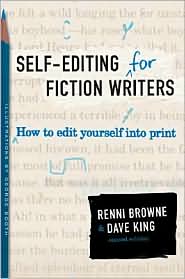
Renni Browne and Dave King’s Self-Editing for the Fiction Writer:

Writer's Guide to Character Traits by Linda N. Edelstein, Ph.D.:

A new addition is Donald Maass’s Writing the Breakout Novel Workbook:

The most helpful craft program I’ve used is Carolyn Greene’s Plot Doctor. I've used element's of Carolyn's program for years. It's the first thing I turn to when I start a new story.
Of course, as a confessed craft book junkie, I would love suggestions. All you writers out there, let me know what are some of your favorite writing reference guides. Whether it's craft, surviving the writing life, whatever. I'm interested.
Saturday, August 1, 2009
Jada, Will and The Holiday Inn -- Part One
Okay, so if you hadn’t read the limo scene in Can You Believe first, you might have thought I stole the idea from Jada Pinkett Smith’s exploits with her husband, Will, on the way to the Academy Awards. Nope. But as reality confirmed, Fallon and Naymond’s luxury backseat tryst is entirely plausible.
That’s the fun and challenge of being a paranormal writer – plausibility. How do you get someone to believe in a world you’ve made up yourself? I have to start with being honest with myself. That means that at least for today, my author interests don’t lie in creating languages and aliens. I think life in good ole Detroit, Michigan, provides plenty of fodder for a trip to the incredible.
Someone asked me just the other day where I get my ideas from. In my last post I wrote about words being where you find them. And for me they are, though it’s not a literal use. For example, my heroine in Where Souls Collide claims a matriarchal psychic lineage.
Well, we don’t have any clairvoyants in the family that I’m aware of, but I’m always tickled by my elderly aunt’s stories of my great-grandmother who was known to leave a man in a heartbeat. If he got on her bad side, she got her trunk and hit the road. Then there are my grandmothers, one who went to cosmetology school and opened her own beauty shop after her daughters were good and grown, and the other who was widowed with three small children and kept her household and faith intact. My mom, too, forged her own path – starting with integrating her high school. The theme I extracted from all this for my story was strong women.
My stories are contemporary. (For now, I’m not doing historicals or futuristics.) They involve familiar settings and situations thrown askew by supernatural intervention. For Fallon and Naymond, the physical therapist and her real estate-selling/wannabe singer husband in Can You Believe, a simple gift gives the couple a glimpse of their future. A reader recently wrote and asked me where she can find that item. Don’t I wish….
I enjoyed the reader’s email because she let me know that I did what I set out to do. The story offered enough of a stretch from the every day to make her want it to be real. I got her to believe.
My father always told me that anything can be rationalized. So in my reality-based fantasy and paranormal, I know it’s key to establish the rules of my world and let the reader know what those are. Anything's possible if I want it to be.
Now, I hope I’m a little more refined in my storytelling than Jada is sometimes (do know, I love me some Jada, and I have since A Different World), but I’m saving the topic of TMI for my next blog on Aug. 16.
See you then.
Stefanie
That’s the fun and challenge of being a paranormal writer – plausibility. How do you get someone to believe in a world you’ve made up yourself? I have to start with being honest with myself. That means that at least for today, my author interests don’t lie in creating languages and aliens. I think life in good ole Detroit, Michigan, provides plenty of fodder for a trip to the incredible.
Someone asked me just the other day where I get my ideas from. In my last post I wrote about words being where you find them. And for me they are, though it’s not a literal use. For example, my heroine in Where Souls Collide claims a matriarchal psychic lineage.
Well, we don’t have any clairvoyants in the family that I’m aware of, but I’m always tickled by my elderly aunt’s stories of my great-grandmother who was known to leave a man in a heartbeat. If he got on her bad side, she got her trunk and hit the road. Then there are my grandmothers, one who went to cosmetology school and opened her own beauty shop after her daughters were good and grown, and the other who was widowed with three small children and kept her household and faith intact. My mom, too, forged her own path – starting with integrating her high school. The theme I extracted from all this for my story was strong women.
My stories are contemporary. (For now, I’m not doing historicals or futuristics.) They involve familiar settings and situations thrown askew by supernatural intervention. For Fallon and Naymond, the physical therapist and her real estate-selling/wannabe singer husband in Can You Believe, a simple gift gives the couple a glimpse of their future. A reader recently wrote and asked me where she can find that item. Don’t I wish….
I enjoyed the reader’s email because she let me know that I did what I set out to do. The story offered enough of a stretch from the every day to make her want it to be real. I got her to believe.
My father always told me that anything can be rationalized. So in my reality-based fantasy and paranormal, I know it’s key to establish the rules of my world and let the reader know what those are. Anything's possible if I want it to be.
Now, I hope I’m a little more refined in my storytelling than Jada is sometimes (do know, I love me some Jada, and I have since A Different World), but I’m saving the topic of TMI for my next blog on Aug. 16.
See you then.
Stefanie
Subscribe to:
Posts (Atom)